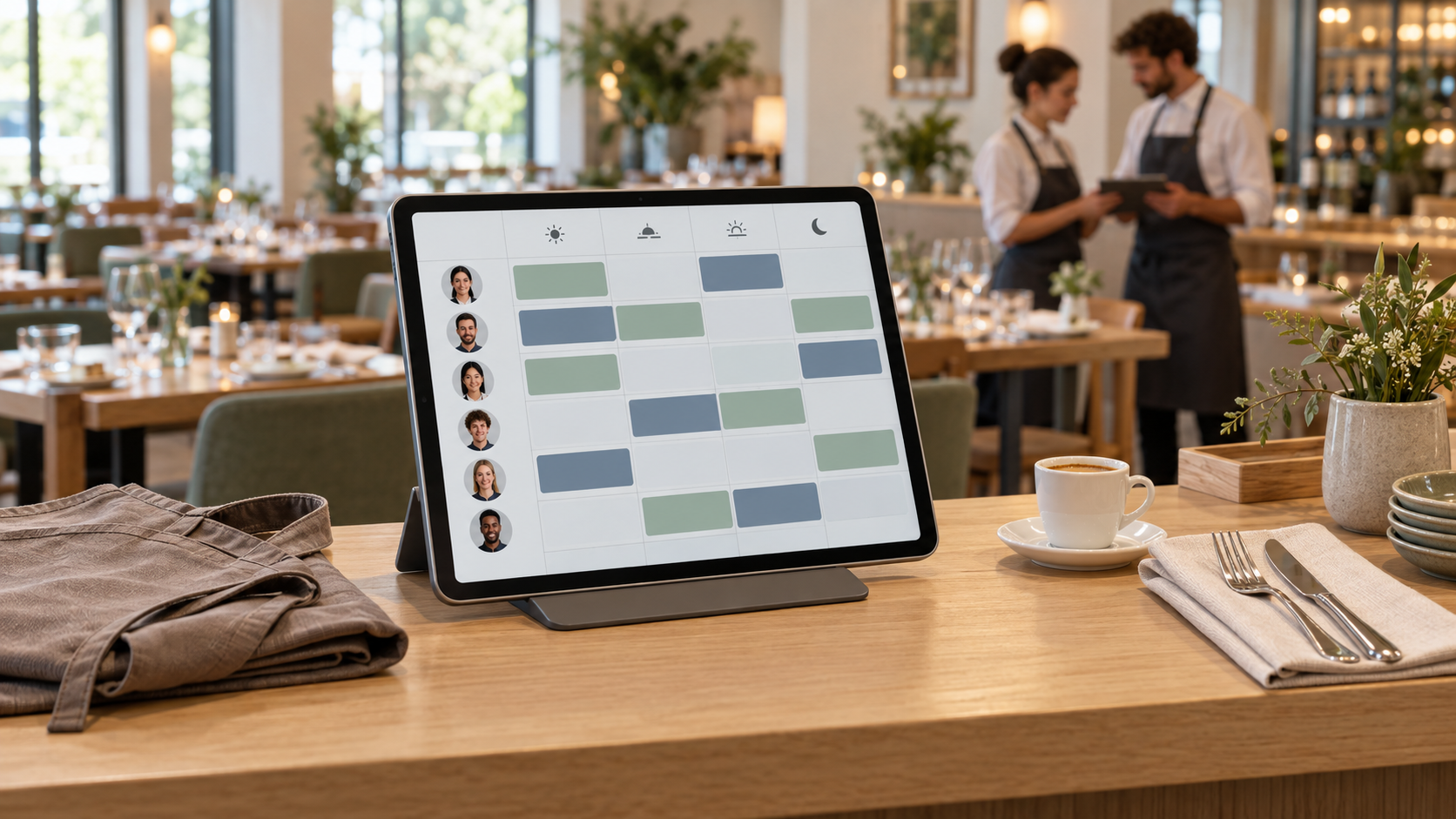
Restaurant scheduling shouldn't take up half your week, but for most managers, it does. That wasted time adds up to roughly 300 hours a year and thousands in avoidable overtime. You're manually tracking who can work when, trying to predict busy periods, and constantly putting out fires when someone calls out or plans change. That's where AI restaurant scheduling benefits come in and actually make a difference. These tools handle the tedious stuff automatically, so you can stop stressing about the schedule and start focusing on what makes your restaurant special.
TLDR:
Restaurant managers spend an average of 6 hours every week building schedules, juggling staff preferences, projected covers, and labor budgets in spreadsheets or paper planners. That's roughly 300 hours a year that could be spent coaching servers, refining the menu, or talking to guests.
AI scheduling changes that equation. You input your parameters once and the system generates optimized rosters in seconds, analyzing historical sales patterns, reservations, and employee availability to match labor to demand.
The impact is measurable. Restaurants using automated scheduling reduce roster creation time by 80% and cut shift miscommunication by 70%. That means fewer frantic texts about who's opening Tuesday, fewer overstaffed lunch shifts, and fewer managers chained to the back office when they should be on the floor.
| Factor | Traditional Scheduling | AI Scheduling |
|---|---|---|
| Time to build a roster | 5-6 hours per week | Minutes (auto-generated) |
| Staffing decisions based on | Manager memory and last week's sheet | Sales history, reservations, weather, and events |
| Callout coverage | Manager calls down a list manually | System identifies and contacts qualified replacements instantly |
| Labor cost control | Reactive, adjusted after the fact | Proactive, matched to forecasted demand before the shift |
| Compliance tracking | Manual checks, easy to miss | Built-in rules block violations before the schedule posts |
| Schedule visibility for staff | Posted days in advance, often on paper | Mobile access with instant notifications of any changes |
| Time-off and swap requests | Texts, calls, sticky notes | In-app requests with automatic conflict flagging |
Labor costs make up a good percentage of restaurant revenue and are climbing year over year. AI scheduling matches staffing levels to forecasted demand by analyzing sales history, reservation data, and seasonal patterns to determine the right number of servers, cooks, and hosts for each shift.
This prevents both overstaffing and understaffing. Overstaffing by one server per shift costs thousands monthly in unnecessary wages. Understaffing slows ticket times, reduces table turns, and drives guests away. AI-driven labor scheduling typically reduces labor cost percentage by 2 to 4 points without compromising service quality.
The restaurant industry has averaged a 79.6% annual turnover rate over the past decade, and replacing a single hourly worker costs hundreds in recruiting and onboarding. Most churn traces back to scheduling friction: last-minute changes to work times, favoritism in prime hours, ignored time-off requests, and rosters posted days late. With restaurant jobs at risk from AI, fair scheduling becomes even more important for retention.
AI scheduling removes human bias from shift distribution. The system allocates weekend nights, holidays, and high-tip shifts based on seniority, performance metrics, and rotation rules you define.
Time-off requests flow through automatically, flagging conflicts and suggesting swaps before approval. Employees see schedules two weeks ahead instead of three days, giving them time to arrange childcare or school commitments.
Predictable schedules change retention. Staff with consistent hours stay longer, train newer hires better, and deliver better service. You spend less time interviewing replacements and more time building a team that knows your guests by name.
A server texts at 5 PM that they're sick. A convention cancels and your dinner rush evaporates. Rain keeps half your expected guests home. Traditional schedules become obsolete the moment reality diverges from the plan.
AI scheduling adapts in real time. When a callout happens, the system instantly identifies qualified replacements based on availability, skill level, proximity to the restaurant, and hours worked that week. It sends shift offers to the best candidates and logs responses automatically.
Changes in demand trigger similar adjustments. If your reservation book suddenly fills or walk-in traffic spikes, AI flags the need for additional floor staff before service degrades. When a slow night becomes obvious by 7 PM, the system suggests early cuts that preserve service standards while controlling labor spend.
Weather alerts, local events, and historical patterns inform these decisions. The AI recognizes that Thursdays before home games need extra bar staff or that rainy Tuesdays run 30% below forecast. You get proactive recommendations instead of reactive scrambling.
This agility saves managers from burning an hour calling eight people to cover one shift. It prevents expensive last-minute overtime by finding available staff first. Guests see no difference when your roster changes because the right people are always in place.
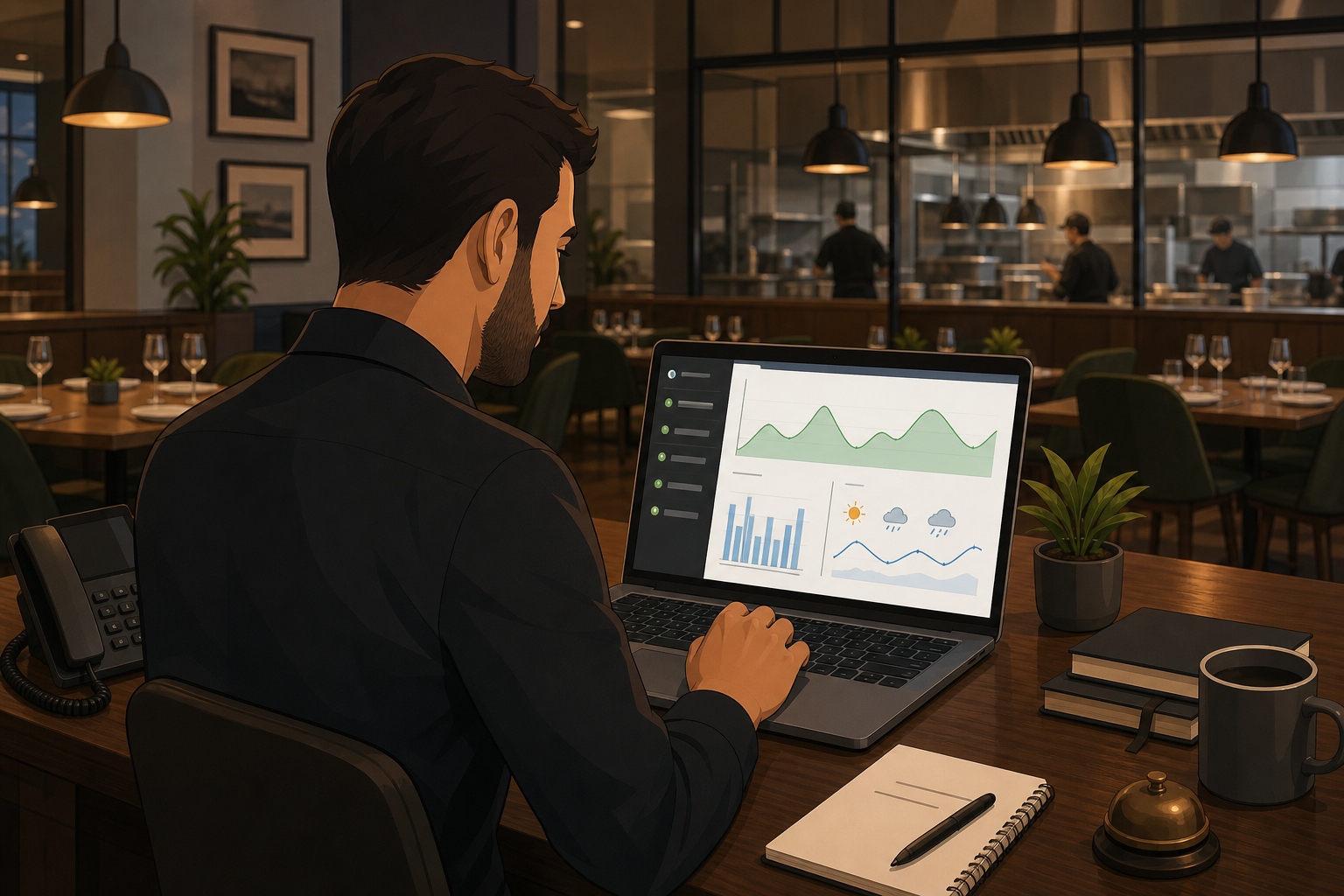
Most managers copy last week's roster with minor tweaks. That works until a parade reroutes traffic or unseasonable heat keeps your patio empty. Guesswork costs you either idle labor or slammed service. The right restaurant automation tools pair demand forecasting with scheduling to close that gap.
AI demand forecasting processes variables humans can't track simultaneously. The system analyzes years of sales data, identifies seasonal patterns, cross-references local event calendars, monitors weather forecasts, and accounts for day-of-week trends.
These predictions translate into precise staffing recommendations three weeks out. You schedule the right number of line cooks for graduation weekend and avoid overstaffing the Monday after a holiday. The system updates forecasts as new data arrives, flagging when actual reservations or advance orders diverge from projections.
Accuracy improves with every service. The AI learns your restaurant's unique rhythm and refines its models continuously, eliminating the costly cycle of understaffing rushes and overstaffing lulls.
Labor regulations shift across city, county, and state lines, creating compliance risks for multi-location operators. 46% of California restaurant workers faced serious Fair Labor Standards Act violations in a 2024 Harvard Kennedy School study.
AI scheduling embeds jurisdiction-specific rules directly into roster creation. The system blocks schedules that violate overtime thresholds, flags missing meal breaks, enforces minor work-hour restrictions, and applies Fair Workweek predictive scheduling requirements.
When you assign work hours, the AI calculates hours worked, verifies break intervals, and alerts you before posting a non-compliant schedule. It tracks advance notice requirements in cities like San Francisco or Philadelphia, preventing penalties that start at hundreds per violation.
The system documents every decision, creating an audit trail that protects you if disputes arise. You never accidentally schedule a 16-year-old past 10 PM or trigger unauthorized overtime. Managers can't memorize every regulation across every location. AI can, turning complex legal requirements into guardrails that work while you focus on service.
Text chains about schedule changes spiral into confusion. Managers field dozens of calls asking "Am I working Tuesday?" or "Did you get my time-off request?" Paper schedules posted in back hallways go unseen until staff arrive for hours that were canceled.
AI scheduling puts rosters on every employee's phone with instant notification of updates. Staff request time off, propose shift swaps, and check availability through the same interface managers use to approve them. The system logs every request and response, creating a transparent record that eliminates disputes and builds trust through visibility.
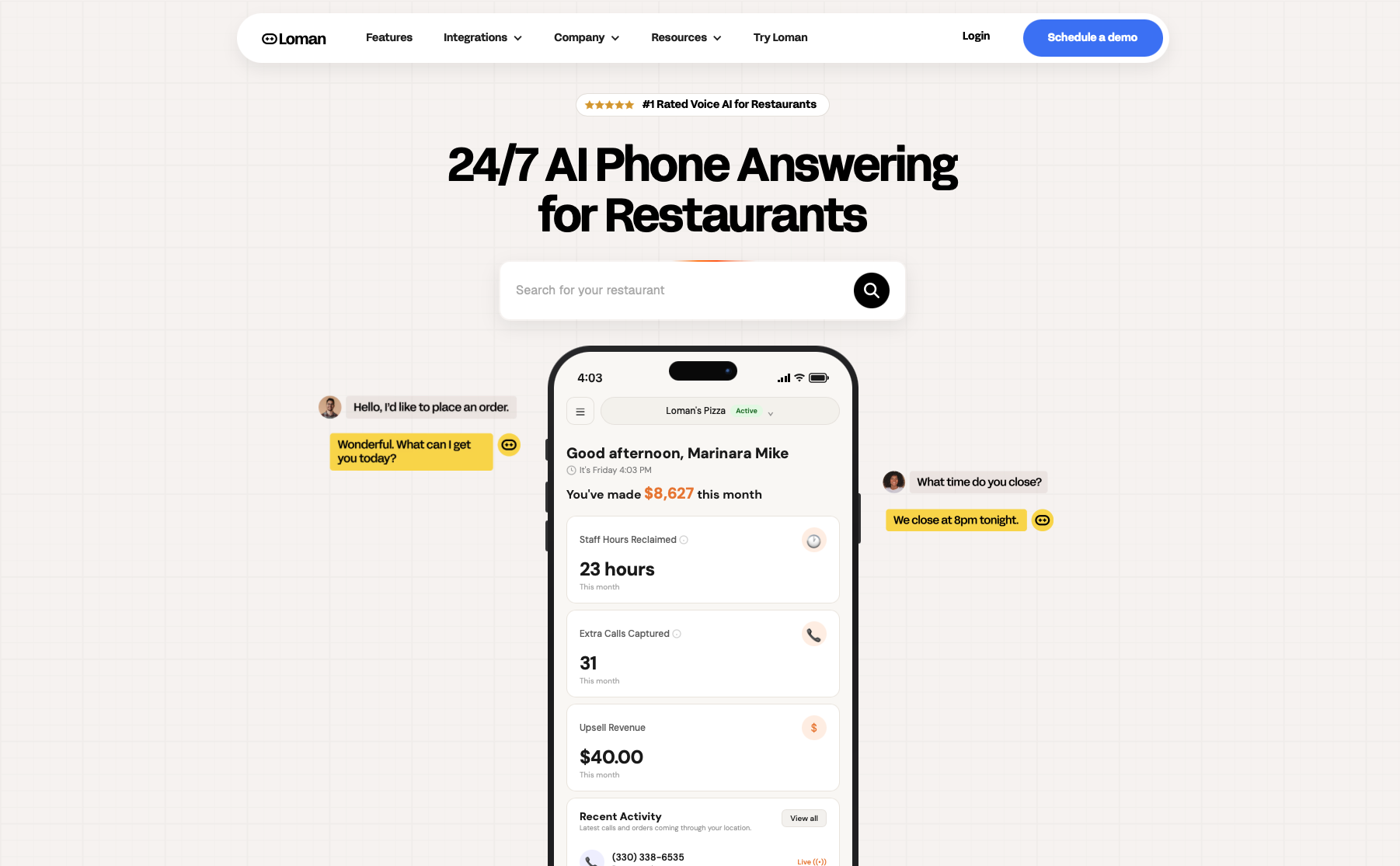
Before you even get to posting a perfect schedule, the phone is already pulling your team off the floor. Missed calls, long hold times, and rushed order-taking create the same drag you’re trying to eliminate with AI scheduling.
Loman AI closes that gap.
Its 24/7 voice-AI phone agent answers every call, takes full pickup and delivery orders, books reservations, handles menu and allergen questions, and syncs clean tickets straight into your POS. No bottlenecks, no manual entry, no staff juggling phones during service.
Smart upsell prompts increase average ticket size (operators report an average ticket size increase of 12-15% after enabling Loman's upsell prompts), while accurate order intake reduces remake costs and friction between FOH and BOH.
For operators running tight labor models, Loman acts like a dedicated phone agent who never calls in sick, never misses details, and follows your menu rules exactly, making your labor planning more predictable and your in-house team more focused on guests. Restaurants using Loman report up to 22% higher phone revenue and a measurable drop in labor hours spent on inbound calls.
Most AI scheduling systems can be configured and running within 24 to 48 hours once you input your menu, staff roster, and basic parameters. The system learns your restaurant's patterns over the first few weeks and becomes more accurate with each service period.
Traditional software provides templates and calendars but still requires manual decisions about staffing levels. AI scheduling analyzes sales history, reservations, weather, and local events to automatically generate optimized rosters that match labor to predicted demand.
Yes, when a staff member calls out, the system instantly identifies qualified replacements based on availability, skill level, and hours worked, then sends shift offers to the best candidates and logs their responses automatically.
The system embeds jurisdiction-specific rules into roster creation, blocking schedules that violate overtime thresholds, flagging missing meal breaks, and enforcing Fair Workweek requirements before you post the schedule. It creates an audit trail that documents every decision for dispute protection.
If you're spending more than 4 hours per week building schedules, experiencing frequent callouts without quick coverage, or struggling to control labor costs within 2 to 3 percentage points of your target, AI scheduling will deliver immediate time savings and cost control.
The AI restaurant scheduling benefits covered here show up in your P&L, your retention numbers, and your managers' stress levels. You stop guessing at staffing needs and start matching labor to actual demand. Your team gets fair schedules posted weeks ahead, and you get the agility to adapt when reality changes. Pair smarter scheduling with Loman AI and you close the other gap: every inbound call gets answered 24/7, orders sync straight to your POS, and your front-of-house team stays focused on the guests in front of them instead of the phone on the wall.
Enter your information in the form to receive a call from Loman and place an order like a customer would!

