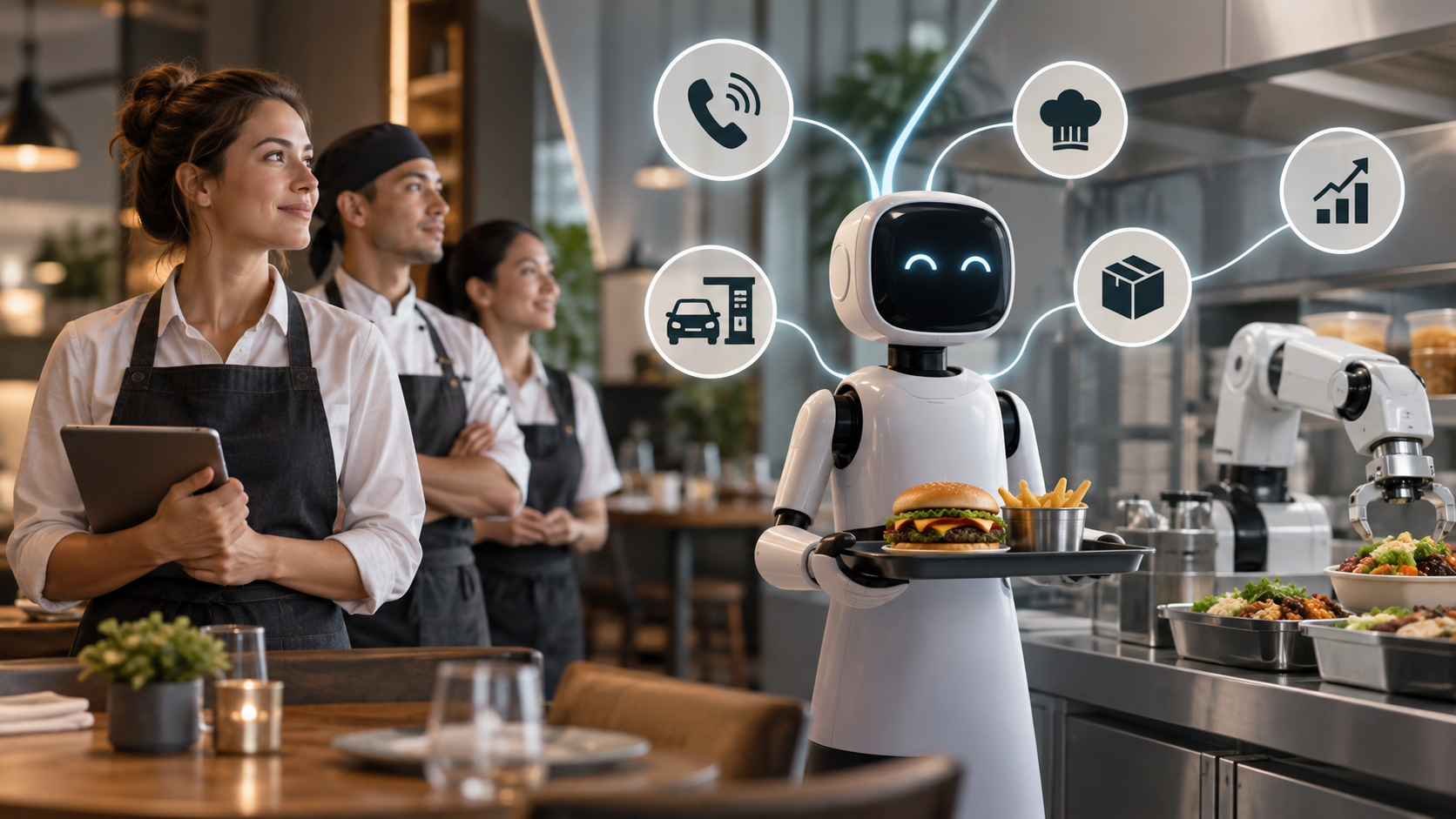
AI is completely changing the restaurant industry, automating tasks like order-taking, food preparation, and inventory management. While these tools are improving productivity and customer experience, experts warn there could be an AI impact on 10-80% of restaurant jobs, especially those involving repetitive tasks. Some chains are already testing voice ordering, automated kitchen displays, and inventory tools that adjust prep schedules automatically. For workers, the real question is how fast restaurants retrain staff and redesign roles as these systems take on more routine work.
TLDR:
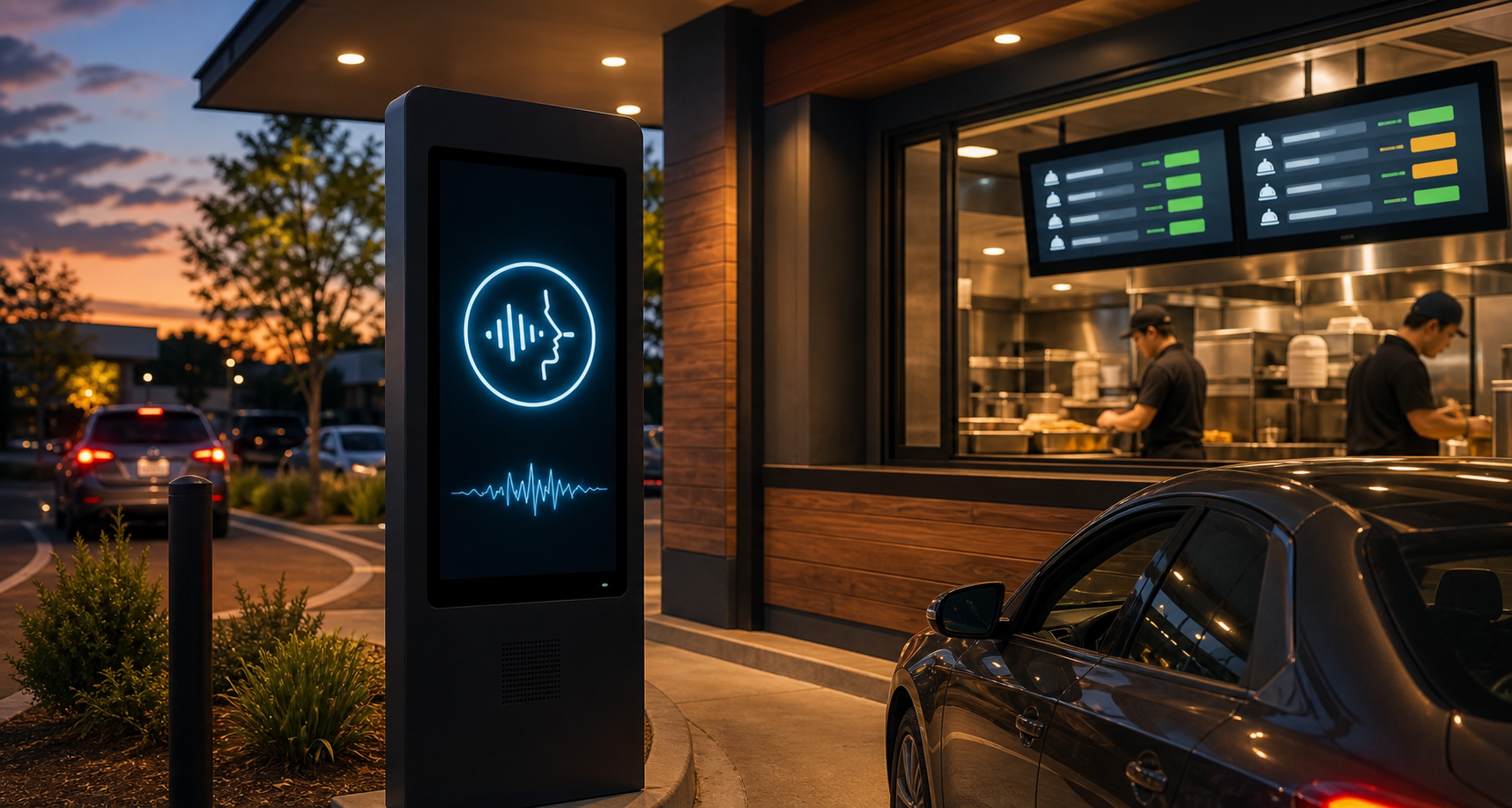
Restaurants are using AI technology to improve how they work and give customers a better experience. The applications span the front of house and the kitchen:
Fast-food chains like McDonald's, Taco Bell, Chipotle, Popeyes, and Domino's are using AI drive-thru voice technology to:
These AI systems can take orders quickly and correctly, reducing wait times and making customers happier. For a deeper look at how these systems work end to end, see our breakdown of AI drive-through technology.
Using AI in restaurants has both good and bad sides. Here's a look at the key pros and cons:
AI can help restaurants in several ways:
However, there are also downsides and challenges with AI adoption:
| Factor | Pros | Cons |
|---|---|---|
| Labor costs | Automation reduces labor costs; operators using AI phone agents report up to 17% lower labor costs | High upfront investment required to implement AI systems |
| Customer experience | Personalized recommendations, faster orders, and shorter wait times | Over-reliance on automation can reduce the human touch customers value |
| Business insights | AI analytics optimize menus, pricing, and marketing based on real dining patterns | Requires technical expertise to interpret and act on AI-generated data |
| Revenue impact | Operators using restaurant-specific voice AI report up to 22% higher phone revenue | Small and mid-size operators may lack resources to capture these gains |
| Workforce | Frees staff to focus on higher-value, guest-facing work | Repetitive roles (drive-thru, barista, server) face the highest displacement risk |
| Data & security | AI can identify patterns that humans miss, improving demand forecasting | Customer data collected by AI systems is vulnerable to cyber attacks and misuse |
Experts warn that AI could lead to large job losses in the restaurant industry. Estimates range from 10% to 80% of restaurant jobs being at risk due to automation.
Studies and experts have predicted different levels of job displacement:
Certain roles are more vulnerable to automation than others:
These predictions point to the real impact of AI on restaurant jobs and the growing need for workers to develop new skills and for restaurants to adapt.
As AI systems take over more tasks in restaurants, there are some concerns that need to be taken care of. Here are the key ethical and social issues:
AI systems can be biased if they are trained on biased data or have flawed algorithms. This could lead to unfair treatment of customers, employees, or job applicants. For example, AI hiring tools may discriminate against certain groups, reducing workforce diversity. Restaurants must make sure that their AI systems are designed to be fair and unbiased.
AI systems collect and process a lot of customer data, which could be vulnerable to cyber attacks or misuse. Restaurants need strong data protection measures to keep customer information safe and maintain trust.
Automating tasks with AI could lead to job losses, especially for low-skilled workers. Restaurants must invest in training programs to help employees develop new skills to work alongside AI. This will benefit both employees and the restaurant by retaining talent.
Restaurants should be transparent about how they use AI, explaining how AI systems make decisions. They also need ways to hold AI accountable if there are errors or biases. Being open and accountable will build trust with customers and employees.
As more restaurants adopt AI technology, owners need to plan how to use it effectively. Here are some strategies to consider:
When selecting AI tools, focus on automating repetitive tasks. This frees up staff for higher-value work. For example:
Choose AI solutions that fit your restaurant's specific needs and goals. A dedicated restaurant phone automation guide can help you map which tasks are best suited for AI versus human staff.
As AI takes over certain tasks, train employees on:
Training helps staff work well with AI systems. It also makes employees more valuable to your restaurant.
Use both AI and human staff to enhance the customer experience:
Combining AI and human strengths creates a unique, engaging experience that sets your restaurant apart.
Restaurants are using AI to improve how they work and give customers a better experience. Here are some examples:
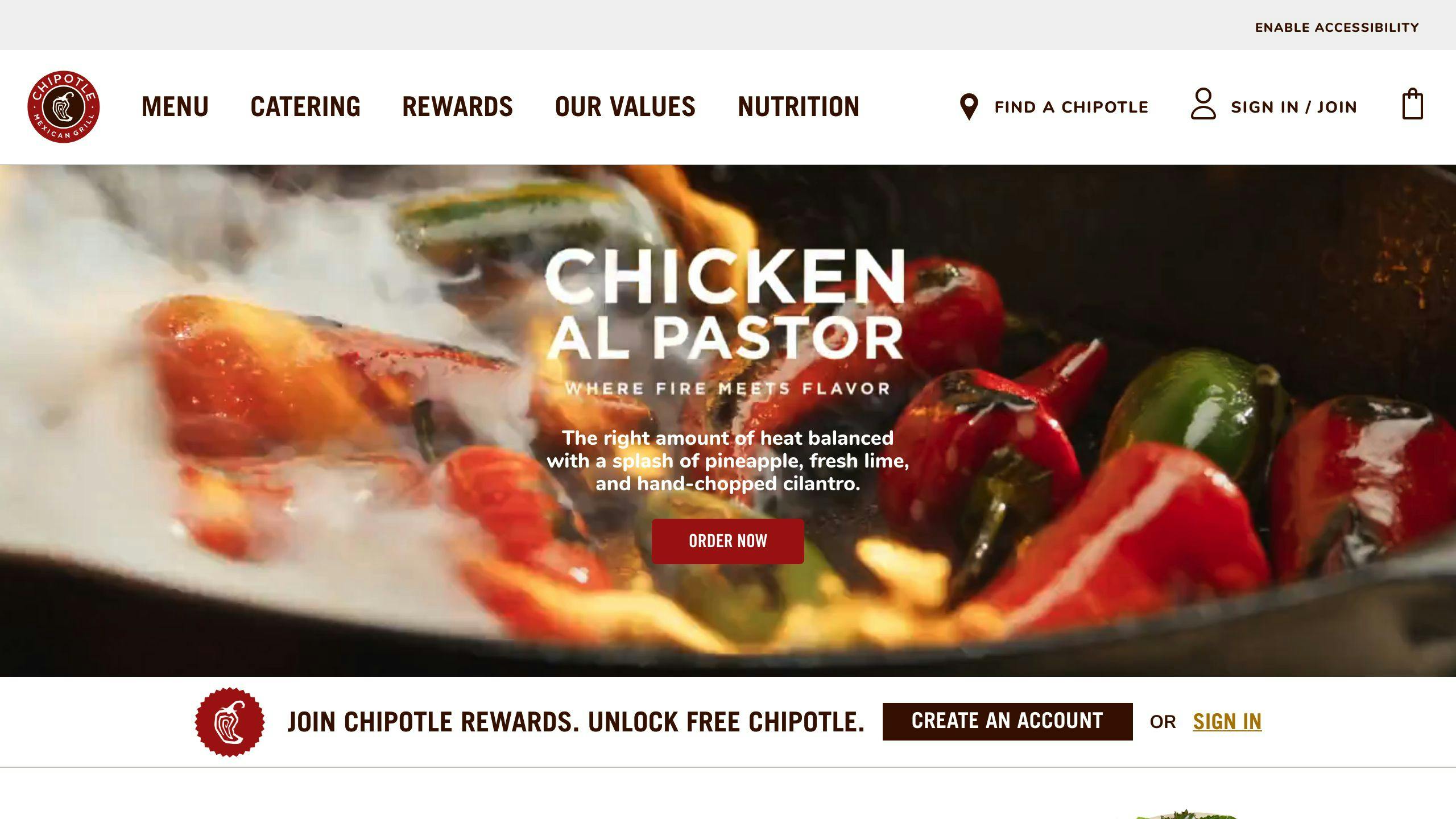
Chipotle uses AI to:
These tools help Chipotle:
Panera piloted an AI voice assistant called "Tori," built with OpenCity, at two drive-thru locations in the Rochester, New York area in 2022. The system was designed to:
Panera's stated goal for the Tori drive-thru AI pilot was:
The AI adoption curve in restaurants has accelerated sharply. According to a 2026 Popmenu trends report, 44% of operators have already adopted AI at their restaurants, with another 25% planning to do so this year, and 42% say they intend to automate more functions to manage rising labor costs. On the consumer side, a 2026 DoorDash survey found that three-quarters of consumers are now comfortable using AI for reservations, yet only 28% of operators are using AI to manage calls and customer service, leaving a wide gap between customer expectations and actual deployment.
The phone channel captures the problem precisely. An industry analysis of 12,091 real restaurant call recordings published in the 2026 State of Calls Report found that roughly 40% of QSR calls go unanswered, with miss rates that climb even higher during dinner rush, and across the broader restaurant category, industry data consistently shows roughly 30% of calls going unanswered during peak service periods. Industry estimates put the annual revenue exposure from missed calls draining restaurant revenue at well into the hundreds of thousands of dollars for a moderately busy full-service restaurant. For operators still weighing whether AI adoption is urgent, the gap between what customers now expect and what most restaurants actually deliver is the number that matters most.
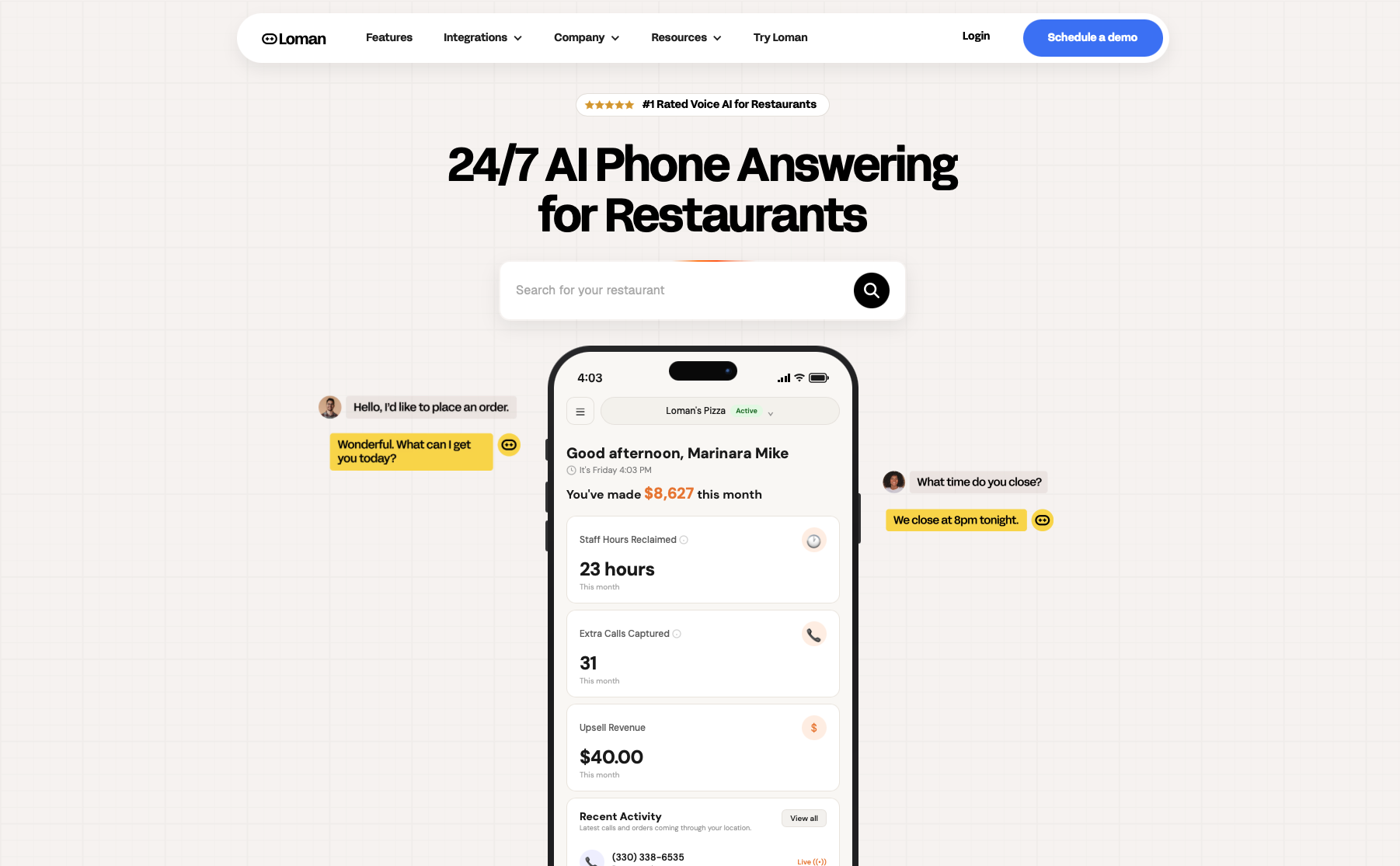
For operators dealing with missed calls, rising labor costs, and overloaded front-of-house teams, Loman AI provides a 24/7 voice-AI phone agent built for restaurants. It answers every call, handles AI order taking for restaurants including full pickup and delivery orders, books reservations, handles FAQs, and securely processes payments, syncing clean tickets directly into major POS and reservation systems, including Toast, Square, Clover, SpotOn, Aloha by NCR, Olo, Stream, and OpenTable.
Designed for independents, multi-unit groups, and national brands, Loman supports complex menus, multilingual callers, catering inquiries, and edge-case routing. It's the only restaurant-specific voice AI phone agent that combines full order taking, payment processing, reservation management, and deep POS integration in one turnkey system.
Estimates vary widely from 10% to 80% of restaurant positions, with drive-thru operators, baristas, and servers facing the highest risk due to their repetitive tasks. Jobs requiring creativity and human interaction, like chefs and managers, are less vulnerable to automation.
Invest in retraining programs that teach employees how to work with new technology while developing customer service skills that AI cannot replicate. Pairing AI automation with skilled human staff creates a hybrid model that benefits both workers and the business.
AI systems collect large amounts of customer information that could be vulnerable to cyber attacks or misuse. Restaurants must implement strong data protection measures and be transparent about how they collect, store, and use customer data to maintain trust.
Consider AI when you're experiencing high call volumes, missed orders, rising labor costs, or staff overwhelmed by phone interruptions. Restaurants with complex menus or multiple locations benefit most from AI that can handle simultaneous calls and sync directly with existing POS systems.
The AI impact on restaurant staffing will keep growing, but the restaurants that come out ahead won't be the ones that automate everything, they'll be the ones that automate the right things. Phone orders, reservations, and routine questions are prime candidates for a voice AI agent, while the guest-facing moments that build loyalty still need a human touch. Loman gives owners a way to close that gap now, handling the repetitive call volume around the clock so staff can focus on the parts of the job that actually keep customers coming back.
Enter your information in the form to receive a call from Loman and place an order like a customer would!

