Phone orders interrupt your flow during the busiest hours, and every interruption costs you time and accuracy. Your team writes down orders by hand, punches them into the POS later, and mistakes happen when things get hectic. An AI order management system answers calls instantly, takes orders through natural conversation, and sends perfect tickets to your kitchen without anyone stepping away from their station. The technology is ready now, and restaurants are seeing results within days of turning it on.
This guide covers how the systems work behind the scenes, what integration looks like with your current setup, and how to get one running in your restaurant this month.
TLDR:
AI order systems cut labor costs and recapture more revenue by answering every call
Systems reach very high order accuracy and reduce food waste through real-time tracking
Most restaurants deploy in under 24 hours with POS integrations for Toast, Square and Clover
AI removes phone interruptions entirely, letting staff focus on guests and reducing ticket errors during peak hours
Modern AI can answer calls 24/7, takes full orders, processes payments and syncs to your POS
AI order management systems combine three technologies: machine learning algorithms, voice recognition, and integration engines that connect to existing restaurant tech stacks.
Machine learning algorithms handle decision-making. These models learn from historical order data to recognize menu items, process modifications, detect caller intent, and improve accuracy over time. 64% of marketers now consider AI critical to their data strategy, with restaurants applying the same approach to analyze call patterns and order trends.
Voice recognition converts spoken language into structured data. When a caller says "large pepperoni pizza with extra cheese," the system transcribes the audio, identifies the base item, recognizes the size modifier, and captures the customization in real-time without forcing customers into rigid menu trees.
Integration engines connect AI processing to existing POS, payment gateways, and reservation systems. Transcribed orders become actual tickets in Toast or Square, credit card payments process securely, and table bookings sync to OpenTable. Supply chain leaders report an 80% improvement in productivity from AI implementations because these integrations eliminate manual data entry and reduce errors.

The order journey starts when a caller dials in. The AI answers immediately, greets them by name if they're a repeat customer, and listens for their request. Instead of menu trees or dial-by-number prompts, the system lets callers speak naturally.
The AI analyzes what callers say to determine whether they want to place an order, make a reservation, ask about hours, or check on an existing ticket. Context matters: "Do you have tables tonight?" triggers reservation logic, while "I want a large pepperoni" routes to order-taking. Historical data helps the system recognize frequent orders and common phrasing patterns specific to each restaurant.
Real orders rarely match the base menu. Callers request substitutions, allergies, cooking preferences, and split items. The AI captures each modifier in sequence, confirms unusual requests, and structures everything into a clean ticket. When someone says "half mushroom, half sausage, but hold the mushrooms on one side and add olives instead," the system parses each clause and sends accurate instructions to the kitchen.
Before finalizing, the AI repeats the order, confirms the pickup time or delivery address, and processes payment over the phone. The completed ticket flows directly into the POS with all modifications intact. Kitchen staff see the same format they're used to, and the order enters the fulfillment queue without anyone touching a phone or keyboard.
AI order management delivers four functions that directly impact restaurant performance.
Orders flow from phone to POS without manual entry, eliminating transcription errors and cutting ticket times. AI ordering systems reach very high accuracy, capturing modifiers, substitutions, and special instructions exactly as requested.
Call data analysis reveals ordering patterns across time, weather, and seasonality. Managers can schedule staff and prep inventory ahead of predicted rushes, stocking ingredients based on projected demand.
Real-time order data tracks ingredient levels and alerts when items run low. This prevents overselling unavailable menu items and cuts waste from over-ordering perishables.
AI order management delivers measurable returns across labor, inventory, and customer retention.
Missed calls represent lost revenue. Restaurants recapture up to 22% higher revenue when every call gets answered and processed correctly. Labor costs drop 10-20% because staff focus on in-person guests instead of splitting attention with phone orders. One AI agent handles unlimited simultaneous calls without overtime, sick days, or scheduling conflicts.
Real-time order data removes guesswork from purchasing decisions. Restaurants using AI reduce food waste by 30-50% and improve inventory turnover by 15-25%. Accurate demand forecasting helps prep teams stock the right ingredients in the right quantities, cutting spoilage and reducing emergency supply runs.
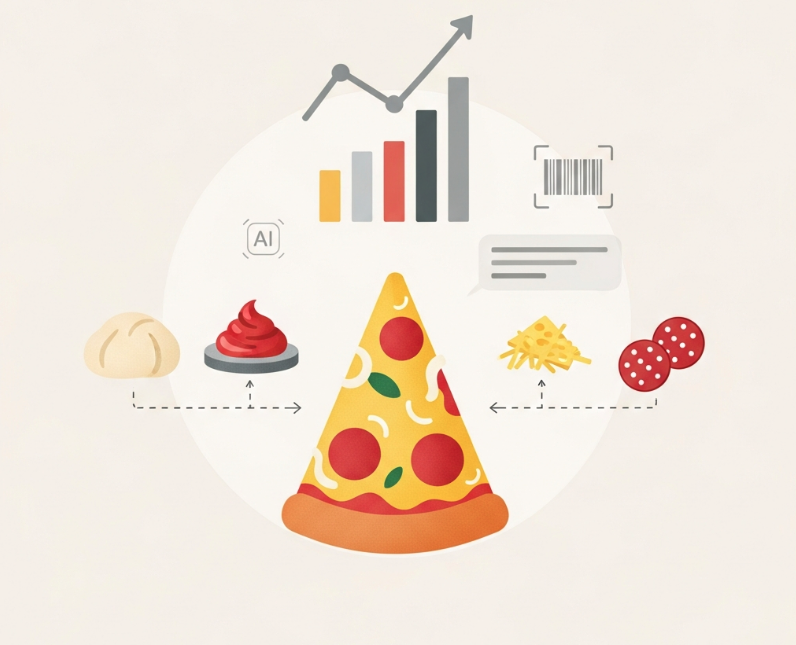
AI order systems monitor ingredient usage as transactions process. A pepperoni pizza order triggers automatic deductions for dough, sauce, cheese, and pepperoni from current stock levels, giving managers visibility into consumption patterns during service hours.
Forecasting models analyze historical data against variables like day of week, local events, and weather. When rainy Fridays consistently generate 40% more delivery volume, the system alerts staff to increased prep requirements days in advance.
Audit your current tech stack first. Document your POS system, reservation management method, and payment processing setup. Map call volume patterns across peak hours and identify which staff members handle phone orders. This assessment clarifies integration requirements and sets realistic go-live targets.
AI order systems connect through API endpoints or direct POS integrations. Confirm compatibility with your existing systems. Toast, Square, Clover, and other major providers offer native connections that sync orders, payments, and reservations automatically. Menu data imports directly from your POS or uploads via spreadsheet. Configure greeting scripts, special instructions handling, and edge-case routing during this phase.
Train staff on monitoring the dashboard, reviewing call transcripts, and managing exceptions the system routes to human review. Assign one person as the primary admin who updates menu changes, hours, and seasonal specials. Clear ownership prevents configuration drift and keeps the system accurate as your menu evolves.
Turnkey solutions can launch in under 24 hours once systems connect and menus upload. Complex implementations involving custom integrations or multi-location rollouts may take weeks. Plan a soft launch during off-peak hours to monitor performance before routing all calls through the AI.
Restaurants face recurring obstacles when deploying AI order systems. Key barriers include identifying the right use cases, managing risks, lack of technical talent, and regulatory compliance concerns.
Front-of-house teams often worry AI will replace jobs. Position the system as a tool that removes repetitive phone interruptions so staff can focus on in-person guest service. Involve team members early by having them review call transcripts and suggest greeting improvements. When staff see AI handling routine requests while they manage complex guest interactions, resistance typically fades within the first week.
Most restaurants lack in-house AI or integration specialists. Select vendors that offer white-glove setup and ongoing support. Turnkey solutions remove the need for technical hiring. Assign one manager as the primary contact who receives vendor training and owns menu updates. This single point of ownership prevents configuration issues without requiring a tech team.
Payment card information and customer data require PCI DSS compliance and privacy safeguards. Verify that your AI vendor processes payments through certified gateways and stores call recordings securely. Ask about data retention policies, encryption standards, and SOC 2 compliance. Reputable providers handle compliance on your behalf, but you remain responsible for vetting their security practices.
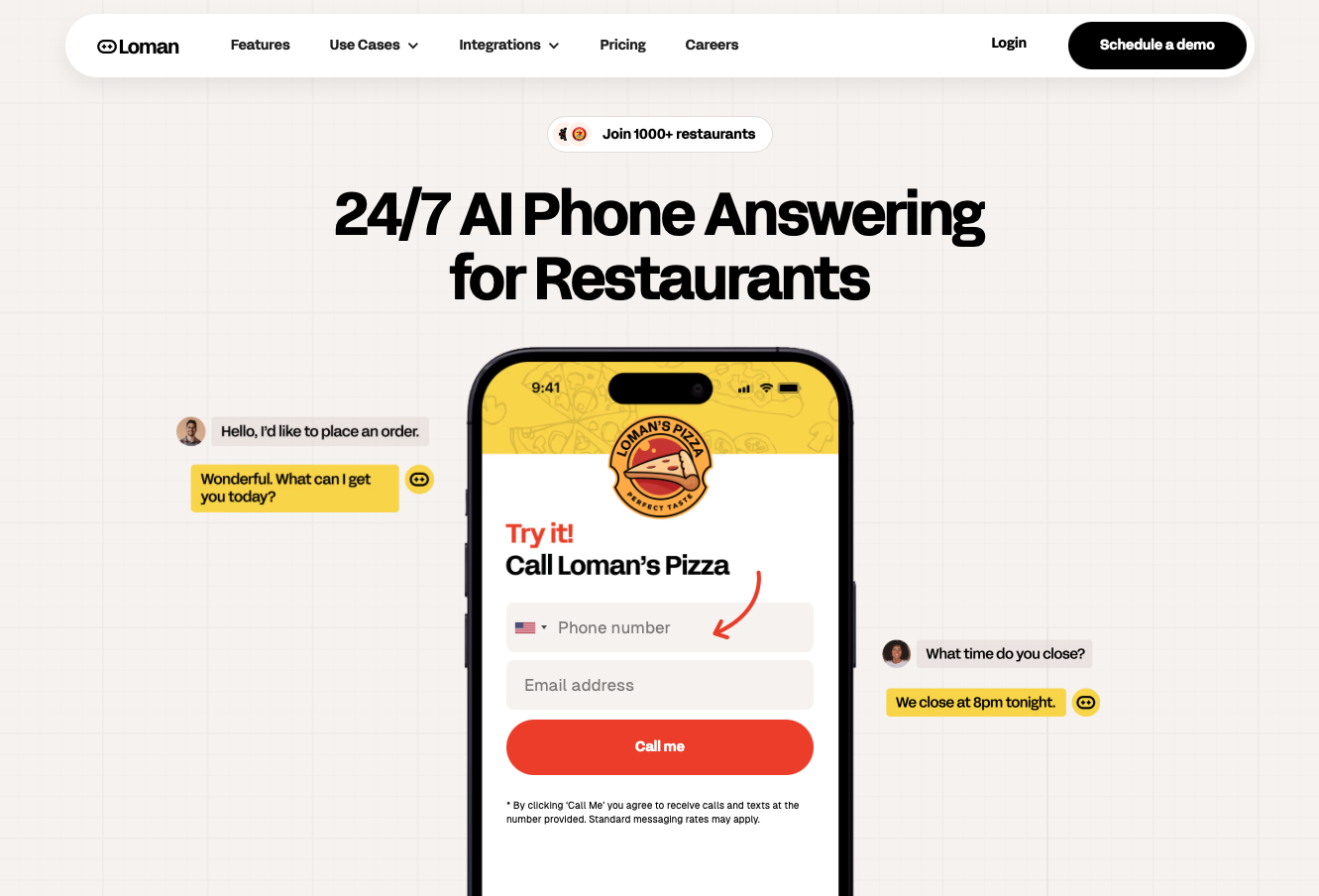
If you want these capabilities without a long buildout, Loman AI is the most direct path. It’s a 24/7 voice-AI phone agent built for restaurants, answering every call instantly, taking full pickup and delivery orders, booking reservations, handling FAQs, and syncing clean tickets and payments straight into systems like Toast, Square, Clover, SpotOn, Aloha, and Olo.
It eliminates missed calls, removes phone interruptions from your staff, and recaptures revenue that normally disappears during peak hours. Most restaurants go live in under 24 hours.
What it delivers:
Answers 100% of calls with unlimited concurrent handling
Full order taking + secure phone payments synced to your POS
Accurate menu, allergen, hours, and policy responses
Reservation booking with OpenTable integration
Upsells, multilingual support, and repeat-caller recognition
Dashboard for transcripts, revenue, and call trends
Multi-location controls and exception routing for edge cases
Loman AI is built for independent operators, multi-unit groups, and national brands that rely on phone orders or takeout. It replaces unpredictable phone labor with a consistent, always-on system.
The gap between busy restaurants and profitable ones often comes down to how well you handle phone orders. AI order management systems like Loman AI close that gap by answering every call, processing complex modifications, and syncing directly with your POS. Your staff stays focused on in-person guests, your kitchen gets accurate tickets, and you capture revenue that used to slip through during rush hours.
Most turnkey AI order systems can go live in under 24 hours once you connect your POS and upload menu data. Complex deployments involving custom integrations or multi-location rollouts may take several weeks, but single-location restaurants typically complete setup within one business day.
AI order management processes spoken orders directly into your POS without human intervention, capturing modifications and special requests at high accuracy. Traditional systems require staff to answer calls, manually enter orders, and split attention between phone and in-person guests, leading to errors and missed calls during peak hours.
Modern AI systems detect edge cases and route them appropriately, transferring to a live staff member, capturing a voicemail with full transcript, or sending a message with caller context for follow-up. The system learns from these exceptions to handle similar requests automatically in the future.
Enter your information in the form to receive a call from Loman and place an order like a customer would!

