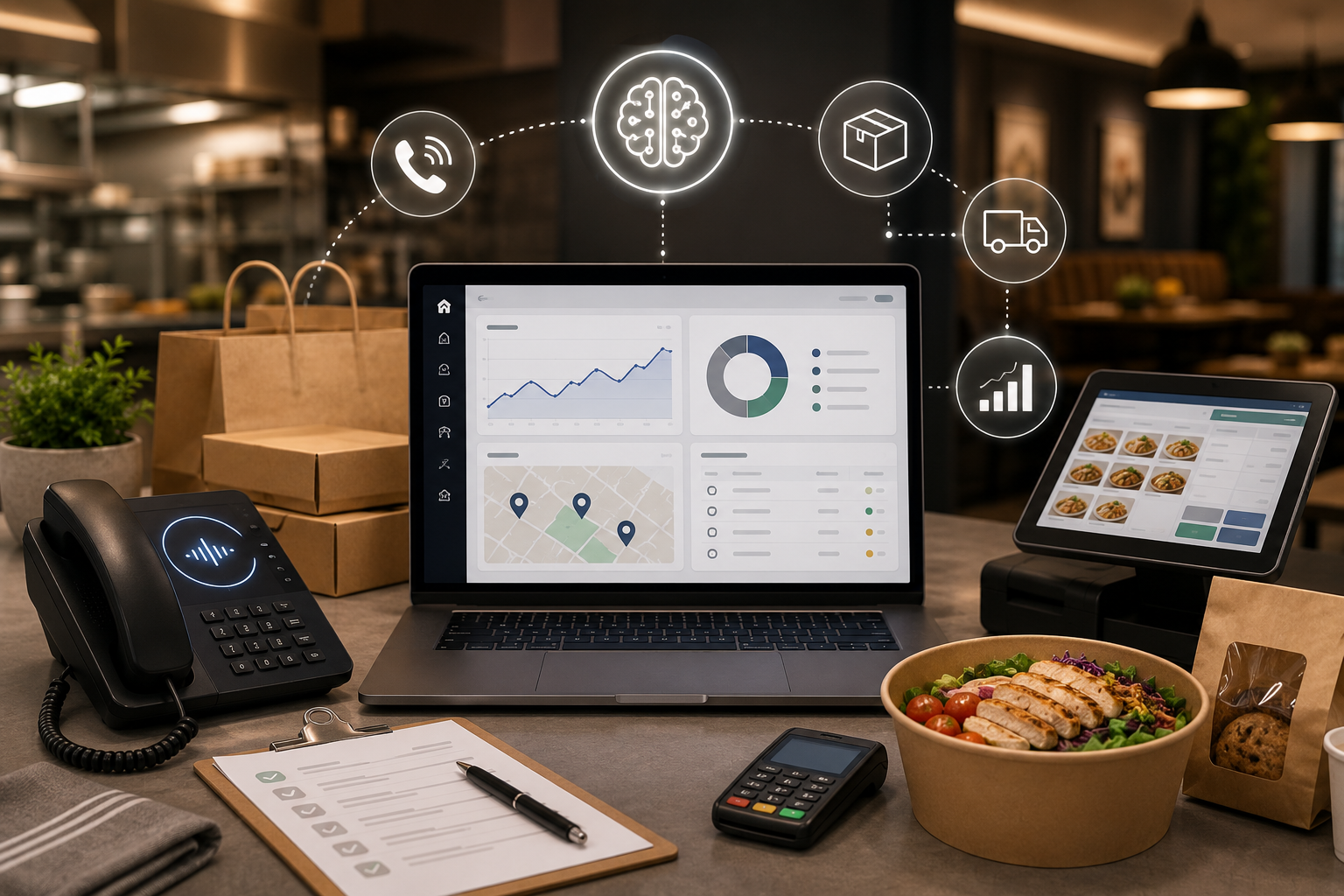
When orders come in outside business hours or peak demand hits without warning, modern businesses need more than a static ordering system; they need intelligence built into the process. AI order management supports real-time decision-making by automatically capturing requests, validating them against live availability and system rules, and directing fulfillment without manual intervention, all through an intelligent tool. Unlike traditional systems that rely on fixed rules and delayed inputs, AI continuously learns from customer behavior, transactional constraints, and transaction patterns, allowing it to adapt instantly to what’s happening across your business at any given moment.
TLDR:
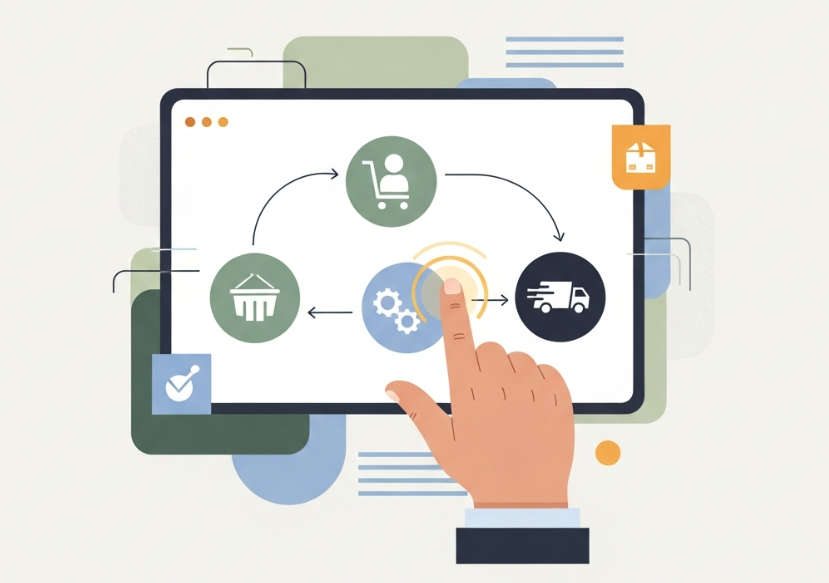
AI order management uses machine learning algorithms to automate how businesses capture, process, and fulfill customer orders. These systems continuously learn from order patterns, customer behavior, and transactional data to make decisions in real time.
Traditional systems rely on static workflows. You set rules, and the system follows them. When something unexpected happens (a demand spike, an out-of-stock item, or a complex customer request), human staff must step in. This creates bottlenecks, delays, and errors.
AI order management handles these scenarios automatically. The system processes natural language from phone calls, chat messages, and online forms. It routes orders based on inventory levels, delivery capacity, and customer priority. It predicts which products will sell out and adjusts fulfillment strategies accordingly.
The difference comes down to adaptability. Rule-based systems execute predetermined logic. AI systems analyze context, recognize patterns, and optimize outcomes without manual configuration changes.
| Feature | Traditional Order Management | AI Order Management |
|---|---|---|
| Order processing | Manual, rule-based workflows | Automated, learns continuously from patterns |
| Error handling | Requires human intervention | Flags and resolves issues automatically |
| Demand forecasting | Historical averages and spreadsheets | Real-time ML models with up to 85% better accuracy |
| Inventory tracking | Periodic, siloed updates | Real-time sync across all locations and channels |
| Processing cost per order | $30 to $60 | $5 to $10 |
| Processing time reduction | Hours or delayed batches | Up to 96% faster |
| Availability | Business hours only | 24/7 across every sales channel |
AI order management relies on five interconnected capabilities that work together to automate decisions and optimize fulfillment.
The system analyzes historical sales data, seasonal trends, and external signals like weather or local events to predict what customers will order. This helps you stock the right products at the right time, reducing both waste and stockouts.
AI calculates accurate delivery dates by assessing current inventory, supplier lead times, and fulfillment capacity. Instead of generic shipping estimates, customers receive commitments based on real-time conditions.
Once an order arrives, the system validates payment, checks inventory, selects the best fulfillment location, and generates pick lists without human review. Edge cases that need attention get flagged and routed to staff with full context.
Machine learning models identify patterns in order data to surface insights: which products frequently sell together, which customers are likely to reorder, and where bottlenecks slow fulfillment. According to 2026 AI order management benchmarks, AI automation cuts order processing times by up to 96% and reduces per-order costs from $30 to $60 down to $5 to $10.

Order errors cost businesses in rework, refunds, and lost customers. Manual entry introduces typos, misread handwriting, and transposed digits.
AI eliminates these friction points through automated validation at every step. When a phone order comes in, speech recognition transcribes the request and matches it against your catalog in real time. The system verifies product codes before the ticket reaches fulfillment.
Every order gets checked against current product data. If a customer requests a discontinued item or uses outdated terminology, the AI flags the discrepancy and suggests the correct alternative. AI-powered validation systems reach 99.5% order-to-catalog match rates across all channels.
Orders arrive from phone calls, web forms, mobile apps, and marketplaces, each with different formats. AI standardizes mailing details, corrects ZIP codes, and validates customer information before processing, preventing failed deliveries and duplicate records.
Human staff still handle edge cases, but AI catches routine mistakes before they cascade into expensive problems.
AI forecasting engines consume data from multiple sources: past sales by SKU and location, seasonal cycles, promotional calendars, competitor pricing, weather forecasts, and local events. Machine learning models weigh these variables to predict demand by product, store, and day.
Spreadsheet-based forecasting relies on historical averages. Last year's numbers plus a growth percentage miss inflection points like heat waves that drive beverage sales, viral social posts that spike demand for specific items, or supply chain delays that shift buying patterns.
Companies using AI for demand forecasting have seen up to 65% better forecast accuracy, according to Gartner and BCG studies, with leading AI platforms reaching 92-97% absolute accuracy versus 65-75% for traditional statistical methods.
The outcomes are fewer markdowns on overstock and fewer lost sales from stockouts.
AI order management creates measurable gains across labor costs, revenue capture, and decision quality.
Automation of routine order processing, payment validation, and fulfillment coordination reduces manual workload. Staff resources shift from data entry to exception handling and customer support.
Faster order confirmation, accurate delivery promises, and fewer fulfillment errors directly improve customer retention. When orders arrive as expected, repeat purchase rates increase.
AI pattern detection across large datasets reveals which products drive margin, which customers generate lifetime value, and where bottlenecks slow fulfillment.
Revenue gains come from eliminated missed opportunities. AI handles inquiries around the clock, processes orders continuously, and recommends relevant add-ons at checkout.
AI order management depends on connections to every system that touches order data. Without unified data flow, AI works with incomplete information and optimization fails.
The integration layer pulls from e-commerce storefronts (Shopify, WooCommerce, BigCommerce), ERP systems managing financials and procurement, warehouse management software tracking inventory movement, and carrier APIs providing shipping rates and tracking updates. CRM data feeds customer history and priority status into order decisions.
APIs need bidirectional sync. Order status updates flow back to customer-facing channels. Inventory changes in warehouse systems update product availability across all sales channels within seconds.
Master data management matters at scale. Product catalogs, customer records, and location hierarchies maintain consistent identifiers across every connected system. Mismatched SKU codes or duplicate customer profiles degrade AI accuracy and create fulfillment errors.
Most AI order management systems offer pre-built connectors for common software. Custom integrations require developer resources and ongoing maintenance as APIs evolve.
Three developments are redefining how order management AI works in practice this year. First, agentic AI has moved from pilot to production: systems now act on their own to reprioritize orders, adjust cut-off times, and reroute fulfillment without waiting for a human to trigger the change. Second, multi-channel inventory sync has become a baseline expectation. According to Netguru's 2026 OMS trend report, retailers using distributed order management have cut order cancellation rates by 85% and made online stock ten times more available by keeping inventory state accurate across every selling channel in real time. Third, AI demand forecasting has moved from weekly batch runs to continuous updates. Models now recalibrate intraday as sales deviate from forecast, so inventory recommendations across a network stay current instead of going stale by midday.
For restaurants in particular, the most visible change is on the phone channel. Voice AI order-taking is no longer a novelty: it has become the standard response to persistent labor shortages and rising customer expectations for immediate service, any hour of the day. Operators who built that layer into their order management stack earlier in 2026 are now reporting fewer missed calls, cleaner tickets, and measurably higher average order values.
Start by mapping your current order workflow from first contact through delivery. Document where staff spend time on manual tasks, where errors occur most often, and which peak periods create bottlenecks.
Set specific goals tied to business outcomes: reduce order processing time by X minutes, cut error rates to below Y percent, or capture Z additional orders during peak hours. Vague objectives like "improve operations" make it impossible to measure success or assess the value of the investment.
Phase your rollout instead of switching everything at once. Begin with one sales channel or product category, validate results, and expand. A phased approach lets you refine integrations, train staff on new workflows, and fix issues before they affect your entire operation.
Assign ownership across teams. IT handles system connections, operations updates workflows and trains staff, and finance tracks ROI. Without clear accountability, implementation stalls when competing priorities arise.
Expect resistance from staff who worry automation threatens their roles. Frame AI as handling repetitive tasks so your team can focus on complex customer requests and strategic work. Share early wins and involve frontline employees in testing to build buy-in.
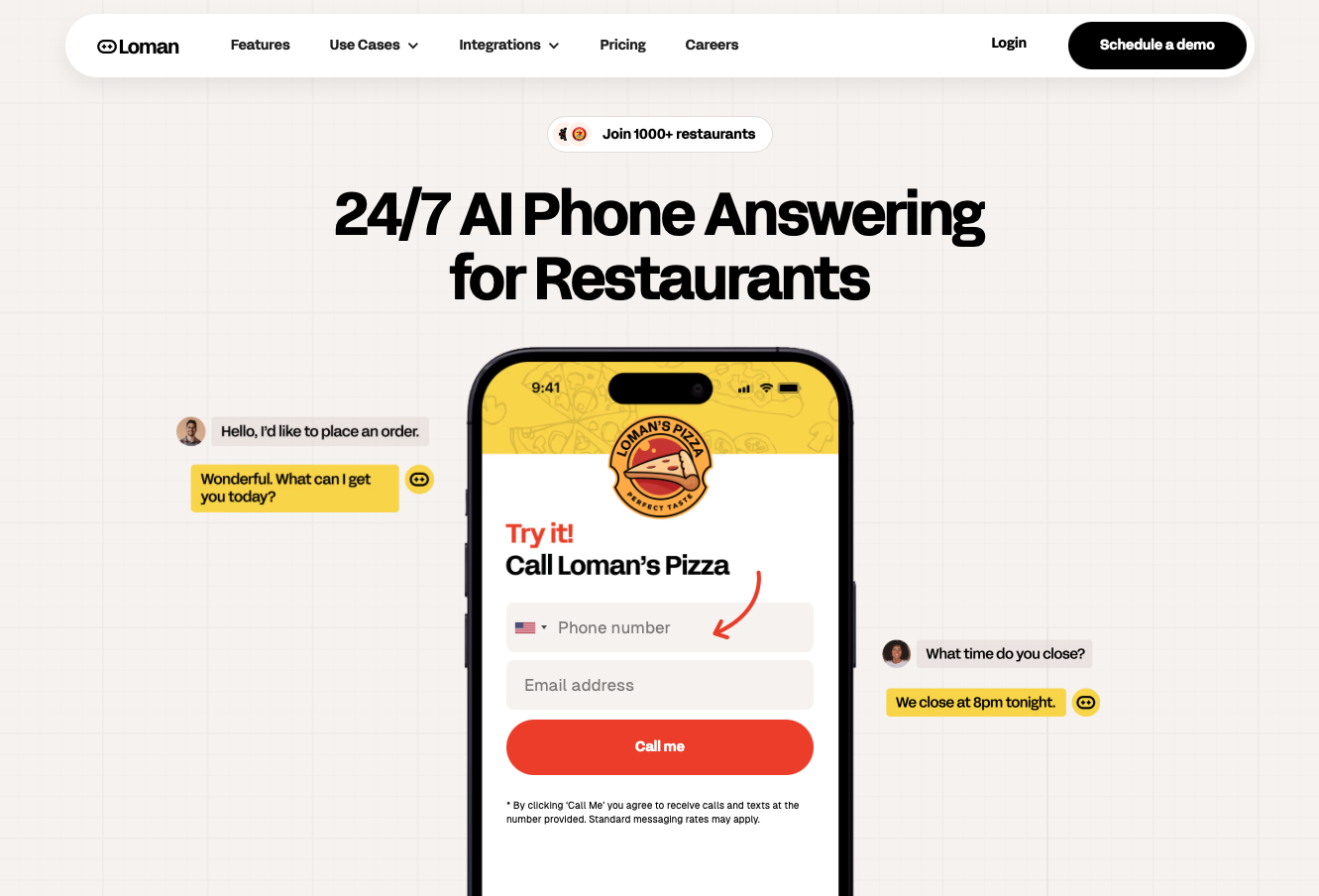
For restaurants, one of the biggest gaps in traditional order management isn't online; it's the phone. Loman AI extends AI order management directly into phone-based ordering by acting as a 24/7 voice AI agent that answers every call, takes pickup and delivery orders, books reservations, and handles menu and policy questions without putting guests on hold. Incoming phone orders are captured in natural language, validated against the restaurant's live POS menu and availability rules, and sent directly into the restaurant's POS, making sure inventory, tickets, and payments stay in sync with existing workflows.
The result is consistent order processing, fewer errors, higher average ticket sizes, and no missed calls, even during peak hours or overnight.
Traditional systems follow fixed rules and require human intervention when unexpected situations arise, while AI order management adapts automatically by analyzing context, recognizing patterns, and optimizing decisions in real time without manual configuration changes.
Most restaurants can go live in under 24 hours with menu import, system connections, and basic setup complete; a phased rollout starting with one channel or product category helps you validate results before expanding to full operations.
Yes, AI pulls orders from phone calls, web stores, mobile apps, marketplaces, and in-store POS into one processing queue, prevents overselling by tracking inventory across all channels in real time, and applies channel-specific rules like upselling for phone orders automatically.
AI order management replaces reactive, manual workflows with systems that think and act in real time, eliminating delays, reducing errors, and unlocking revenue that traditional processes miss. By automating order capture, menu validation, and order handling across every sales channel, platforms like Loman AI extend these benefits directly to restaurant phone orders, where missed calls and labor constraints often hurt performance the most. With tools such as Loman AI handling orders, payments, and reservations around the clock while syncing smoothly with existing POS systems, businesses can start with their biggest bottleneck, see immediate time and cost savings, and scale confidently as demand grows.
Enter your information in the form to receive a call from Loman and place an order like a customer would!

