
When was the last time you tried to understand why a menu item slipped and ended up bouncing between POS reports, inventory counts, and supplier invoices to piece together an answer? An AI-powered menu planning system connects those signals automatically, reading sales patterns, ingredient costs, and customer behavior as they happen through an integrated decision layer. Instead of guessing, you see why Tuesday lunches fall off when it rains, which appetizers convert best as add-ons, and where margin quietly erodes, all without losing hours to spreadsheets or manual analysis.
TLDR:
AI-powered menu planning analyzes sales patterns, customer behavior, ingredient costs, and feedback in real time to inform your menu decisions. Instead of quarterly reviews based on limited data, this system runs daily analyses across your POS transactions, inventory systems, customer reviews, and market pricing feeds.
The value comes from processing multiple variables simultaneously. Food costs change weekly. Customer preferences shift by season, day of week, and weather conditions. While you can spot obvious trends, AI identifies patterns like which Tuesday lunch items underperform during rain, or which appetizers sell better as upsells than standalone orders. The system connects data points that would take weeks to manually track across your restaurant operations.
Your restaurant generates thousands of data points daily through POS transactions, inventory systems, customer reviews, and supplier invoices. The challenge isn't data scarcity, but fragmentation. These systems rarely communicate with each other, making it nearly impossible to understand why specific items perform well or poorly.
You might notice your salmon special sold well last Thursday, but identifying the root cause (pricing, weather, competitor activity, or supply chain issues affecting alternatives) requires connecting disparate data sources. Menu trends shift constantly, yet most restaurants review performance quarterly. By then, you've already spent weeks operating with suboptimal margins. Spreadsheets track individual metrics but can't process the simultaneous interaction of multiple variables that actually determine menu success.
AI menu systems analyze six types of data to assess performance. Historical sales data shows which items sell at specific times and days. Real-time ingredient costs and supplier availability feed into margin calculations. Ordering patterns reveal which dishes get paired, modified, or returned.
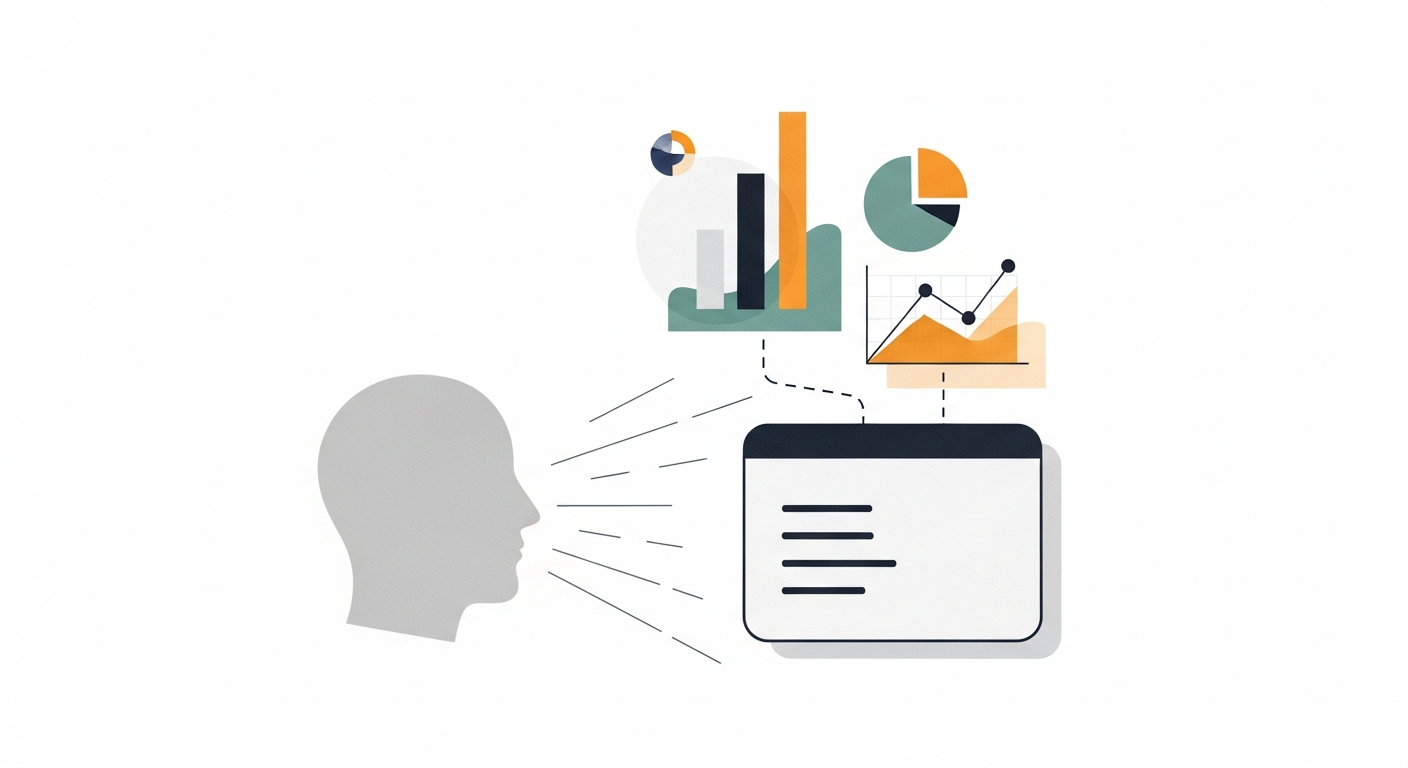
The fourth input tracks profit margins per dish after factoring in prep labor, cook time, and plate costs. Fifth, preparation complexity data measures kitchen impact. A dish requiring 12 minutes and your best line cook affects throughput differently than a 3-minute appetizer. Sixth, external variables like weather, local events, and competitor promotions explain unexpected sales patterns.
AI analyzes these interconnected factors to surface hidden insights. It might flag that your highest-margin pasta sells poorly on Fridays because ticket times spike when your grill is slammed, creating kitchen bottlenecks that delay the entire order.
Predictive ordering systems use AI to forecast ingredient needs based on historical sales patterns, weather forecasts, local event calendars, and seasonal demand curves. Instead of ordering based on gut feel or last week's usage, the system calculates precise quantities needed for each ingredient across your planning window.
The financial impact goes beyond reducing spoilage. Overordering ties up cash in perishables that lose value daily. AI-based forecasting reportedly reduces inventory errors by 15-40%, freeing capital while cutting waste. When you order 30% less produce because the system predicts a slower Tuesday based on weather patterns and past performance, you're protecting both margins and ingredient quality.
Restaurants using AI waste tracking have reportedly achieved 23-51% reductions in food waste. The system learns which proteins move slower on certain days, which produce items spoil fastest, and which prep quantities result in end-of-shift waste.
Menu profitability depends on which combinations customers actually order. A 70% margin appetizer that rarely sells underperforms a 45% margin entree that drives high-value orders.
AI assesses each menu item across popularity, contribution margin, kitchen capacity impact, and ordering patterns. It categorizes dishes as stars (high profit, high volume), plowhorses (low profit, high volume), puzzles (high profit, low volume), or dogs (low profit, low volume), then models how menu changes affect your sales mix.
Ongoing menu engineering increases restaurant profits by 10-15%. AI may recommend featuring puzzles through server prompts, repricing plowhorses to protect margins, or removing dogs that waste prep time. These decisions account for substitution effects when customers can't order their usual choice.
Start by documenting your current menu performance baseline. Calculate actual food costs, prep times, and contribution margins for every item over the past 90 days. Identify which dishes you're guessing about versus measuring accurately. This audit reveals data gaps your AI system needs to fill and sets metrics for measuring improvement.
Select software that integrates directly with your existing POS and inventory systems. API connections that pull real-time transaction data matter here. Skip solutions requiring manual data exports or CSV uploads. Your system should ingest sales, ingredient usage, and pricing updates automatically with minimal manual intervention.
Staff training determines whether your implementation succeeds or becomes another unused dashboard. Train managers to interpret AI recommendations instead of accepting them blindly. When the system suggests repricing your burger, your team should understand the underlying sales patterns and margin calculations driving that recommendation.
Set weekly review meetings to assess AI-generated insights against actual kitchen and customer feedback. Your line cooks know when prep times don't match reality. Servers understand which upsells feel natural versus forced. Combine AI analysis with frontline observations to refine recommendations.
AI analytics track five core metrics that reveal menu health. Sales velocity measures how many units of each item sell per hour during specific dayparts, identifying which dishes move quickly during lunch versus dinner. Contribution margin tracking shows real-time profitability as ingredient costs fluctuate, alerting you when a once-profitable entree now loses money due to supplier price changes.
Waste metrics connect specific ingredients to spoilage patterns and dishes to prep overages. Customer ordering patterns map which items get purchased together, modified frequently, or returned, revealing menu relationships your team might miss.
Seasonal performance tracking compares current sales to equivalent periods from previous years, adjusting for variables like weather and local events. AI can update these metrics daily and flag meaningful changes within 48 hours, letting you adjust recipes, pricing, or specials before a two-week downtrend becomes a quarterly loss.
Menu planning decisions directly shape what customers see when they browse your menu, call to order, or ask servers for recommendations. AI-informed descriptions place emphasis on dishes that data shows resonate with your audience, while pricing reflects both ingredient costs and what customers actually pay for similar items.
Phone orders capture ordering preferences, modification requests, and peak demand timing that feed directly into menu planning. Recording which items customers ask about, which combinations they order, and which upsells succeed reveals actual customer requests versus assumed preferences. This data shows real ordering patterns that inform item placement and server prompts.
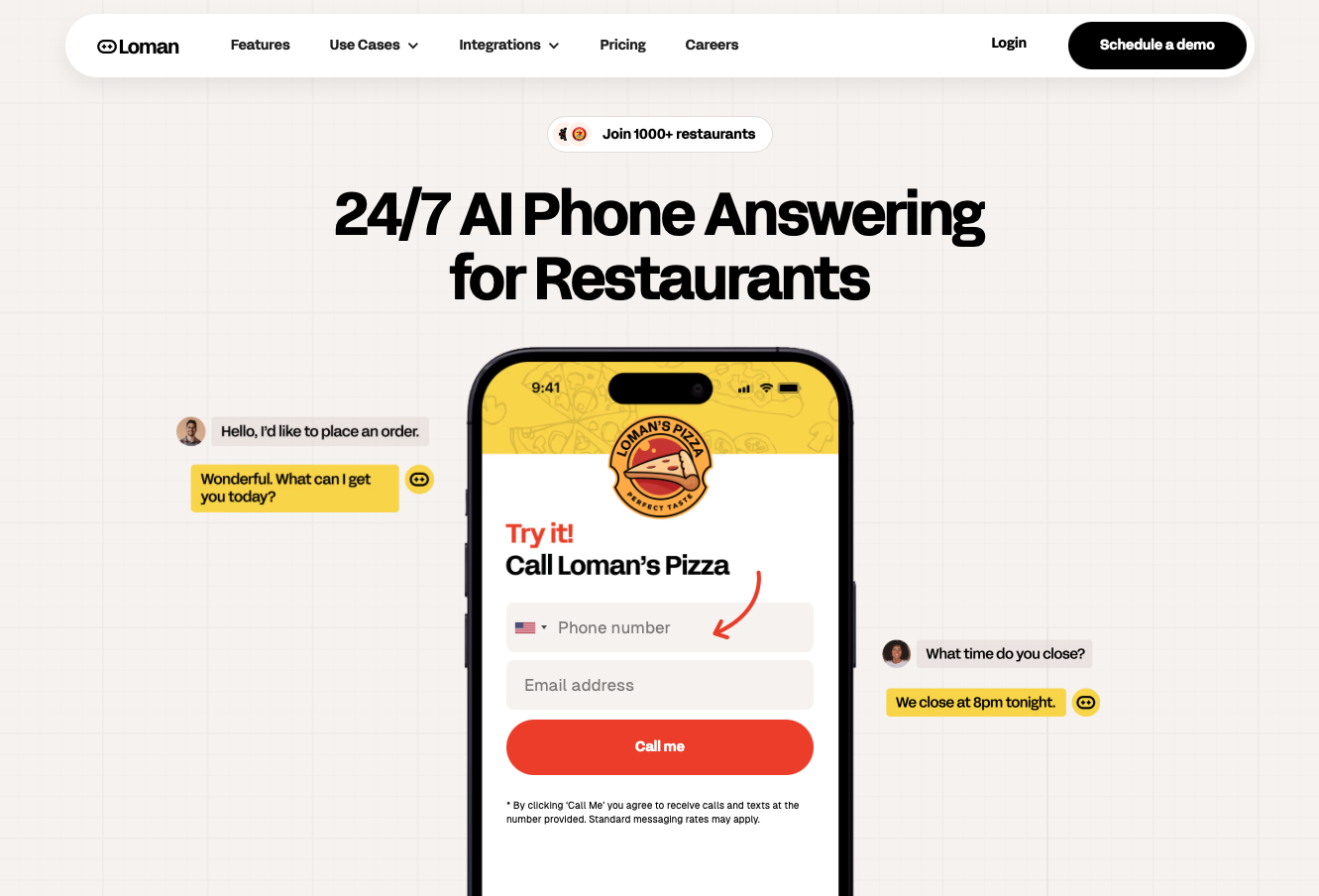
Phone calls capture some of the most honest menu data a restaurant gets, yet that information is often lost the moment the call ends. Guests reveal what they want through questions, substitutions, repeat orders, and hesitation points, all of which signal real demand. An AI-powered menu approach becomes far more accurate when those signals are captured consistently instead of filtered through rushed staff or missed calls.
Loman AI ties the phone channel directly into menu intelligence by answering every call, taking pickup and delivery orders, handling reservations, and syncing tickets and payments straight into the POS. Each interaction can record item popularity, modifiers, upsell acceptance, and timing patterns across dayparts. This creates a clearer picture of how guests actually order, on top of what shows up on in-house tickets, adding depth to menu planning decisions.
By turning live phone demand into structured data, Loman strengthens menu pricing, item placement, and mix decisions using a unified system. Restaurants gain insight from every call while staff stay focused on in-person guests, creating a feedback loop where guest behavior continuously informs smarter menu updates.
AI menu planning systems pull from your POS transactions, inventory management software, supplier invoices, customer reviews, and external data like weather forecasts and local events. The system needs direct API connections to these sources for real-time analysis, not manual CSV uploads.
Traditional menu engineering categorizes dishes quarterly using static sales and margin data. AI-powered planning runs daily analyses across multiple variables (sales velocity, ingredient costs, prep complexity, weather patterns, and ordering combinations) to recommend changes before trends become losses.
Begin with a 90-day baseline audit of your actual food costs, prep times, and margins for every item. Then select software that integrates directly with your POS and inventory systems through APIs, and train your managers to interpret AI recommendations alongside frontline kitchen and server feedback during weekly review meetings.
Menu decisions no longer have to rely on periodic reviews and instinct calls made with incomplete information. With an AI-powered menu approach, restaurants can respond to cost changes, demand patterns, and ordering behavior while those signals still matter. Loman brings those insights together by turning everyday POS activity into clear menu guidance you can act on through this AI-powered menu planning system. The result is tighter margins, smarter ordering, and menus that reflect how guests actually buy, not how you assume they do. Start with a handful of items, validate the insights, and build from there as confidence in the data grows.
Enter your information in the form to receive a call from Loman and place an order like a customer would!

