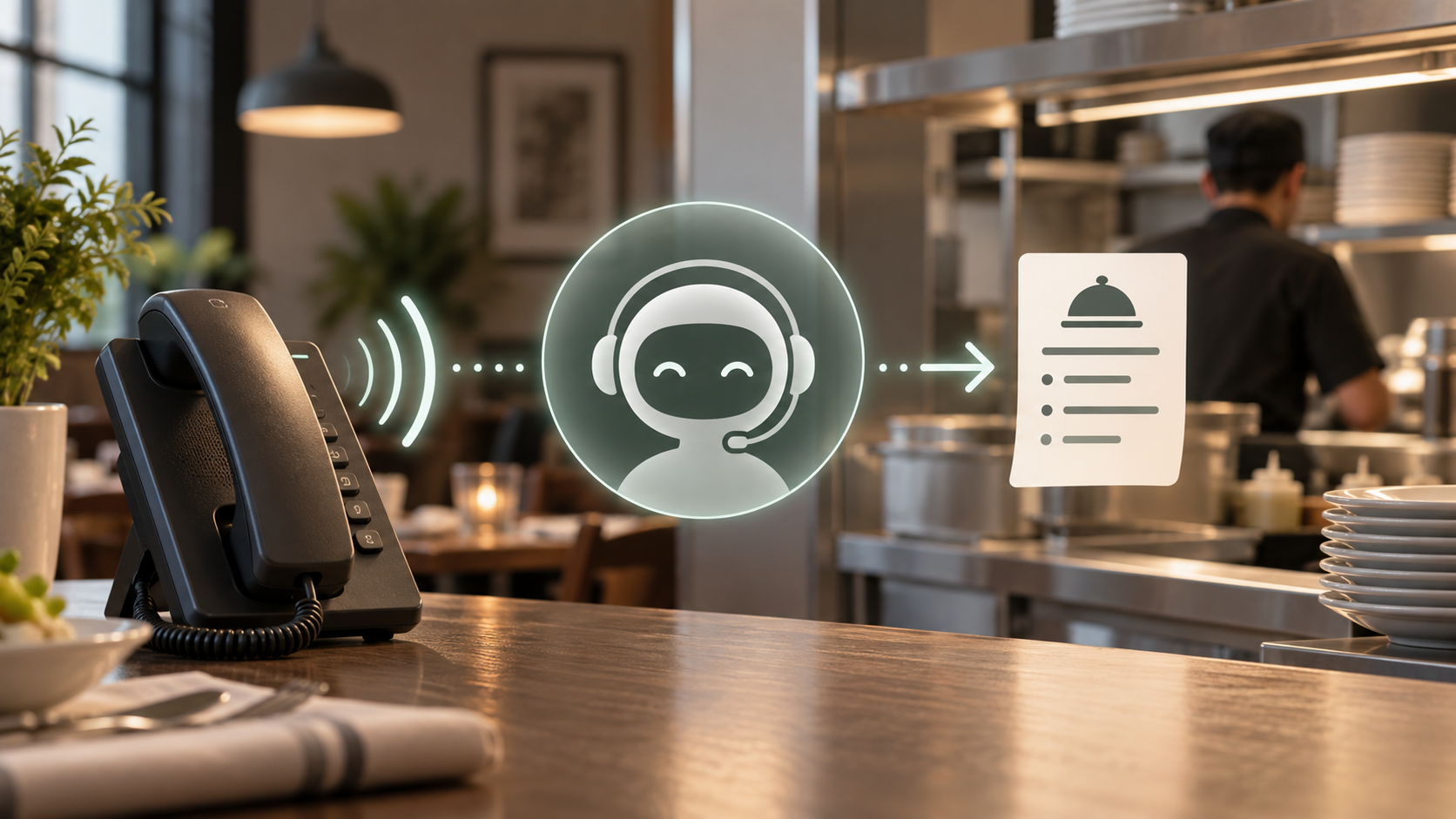
The phone rings during your Friday dinner rush, every staff member is already tied up, and the caller hangs up before anyone gets to it. That missed call is a missed order, and it happens dozens of times a week in restaurants running on thin margins and leaner crews. Voice AI addresses that gap by answering every call, taking the full order, and sending it straight to your kitchen, with no extra headcount required. This post covers how it works and what it means for your bottom line.
TLDR:
Restaurants often face problems when serving customers. Here are some main issues:
Many restaurants struggle to keep workers. This means:
A 2025 survey found that 90% of consumers have received an incorrect food order, with more than half requesting a refund as a result. This shows why restaurants need better ways to take orders. Missed calls compound the problem. See how missed calls drain restaurant revenue every day.
Service can be different depending on who's working. This leads to:
When service isn't the same for everyone, customers might not come back.
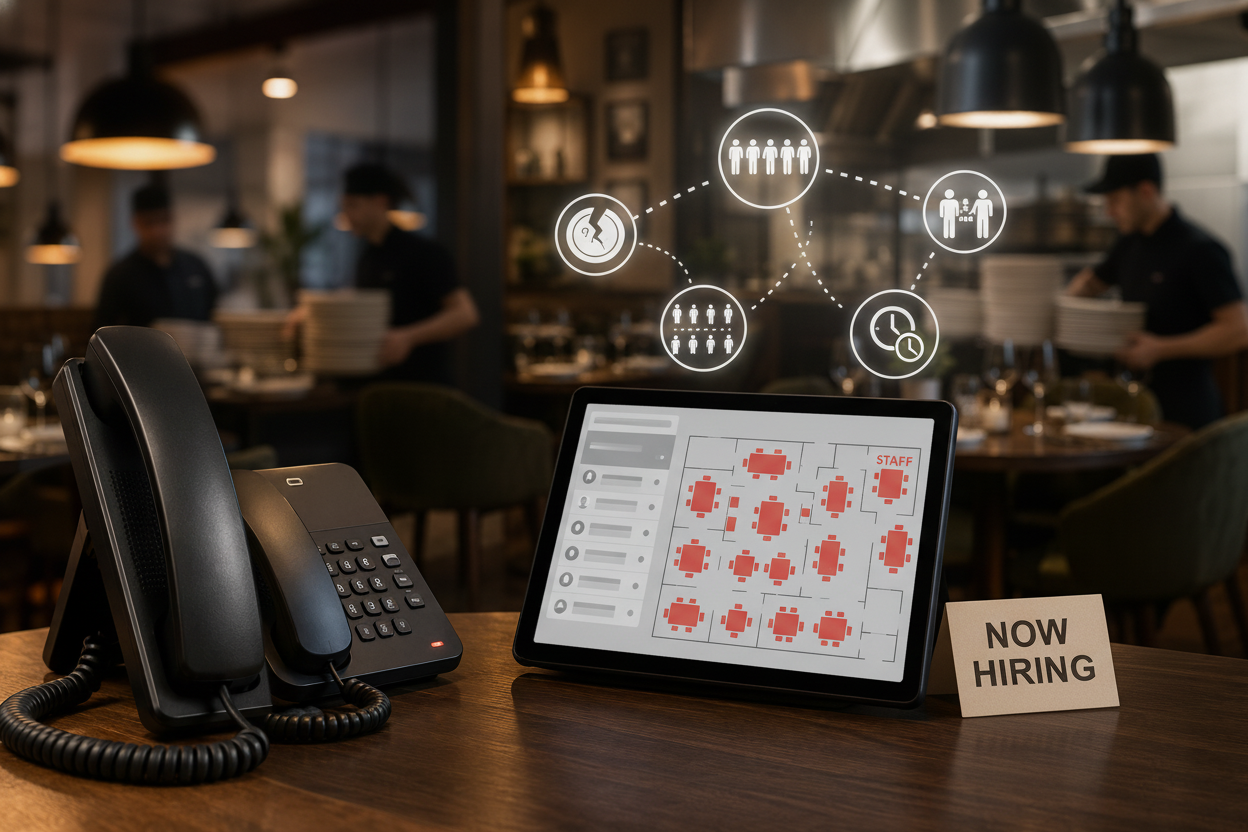
Busy times can be hard to handle, and restaurants that adopt best practices for high-volume calls see far fewer dropped orders. This causes:
A 2025 TouchBistro report found that 42% of diners say a wait over 30 minutes would deter them from visiting a restaurant again. For a closer look at how AI cuts those numbers, see AI's impact on guest wait times.
Restaurants get orders in different ways:
Mixing up these orders can make customers unhappy.
These problems can hurt a restaurant's reputation and business. By understanding these issues, restaurants can look for better ways to serve customers, like using Voice AI.
Voice AI is changing how restaurants handle customer service. This new tool uses computer smarts to make ordering food easier and better for everyone.
Voice AI understands what people say. It can:
Voice AI helps restaurants in many ways:
These features make Voice AI a useful tool for restaurants. It can help them serve customers better and make fewer mistakes.
Voice AI brings many good things to restaurants. Here's how it helps, and if you're weighing the investment, our breakdown of AI phone agent ROI for restaurants covers payback timelines in detail.
Voice AI makes fewer mistakes when taking orders. See the top benefits of voice AI for restaurants for a full breakdown. It can:
Customers don't have to wait as long because:
Voice AI makes eating out more fun:
Restaurants can save money with Voice AI:
| How It Saves Money | What This Means |
|---|---|
| Less staff needed | Lower wage costs |
| Fewer order mistakes | Less wasted food |
| Faster service | More customers served |
Here's how to set up Voice AI in your restaurant:
To start, link your Voice AI to your Point of Sale (POS) system. This lets the AI see your menu, prices, and stock. When picking a Voice AI, make sure it works well with your POS to avoid problems. For a deeper look at how these connections work, see our guide on integrating AI phone systems with POS platforms.
After setup, teach your staff how to use the Voice AI. Show them:
You'll also need to add your menu, prices, and deals to the AI. Make sure its voice matches your restaurant's style.
You might face some issues when setting up. Here's how to handle them:
When restaurants use Voice AI, it changes how they work. These changes make things run better and help manage the restaurant more easily.
Voice AI changes what people do in the restaurant:
This lets staff do more important work and take better care of customers.
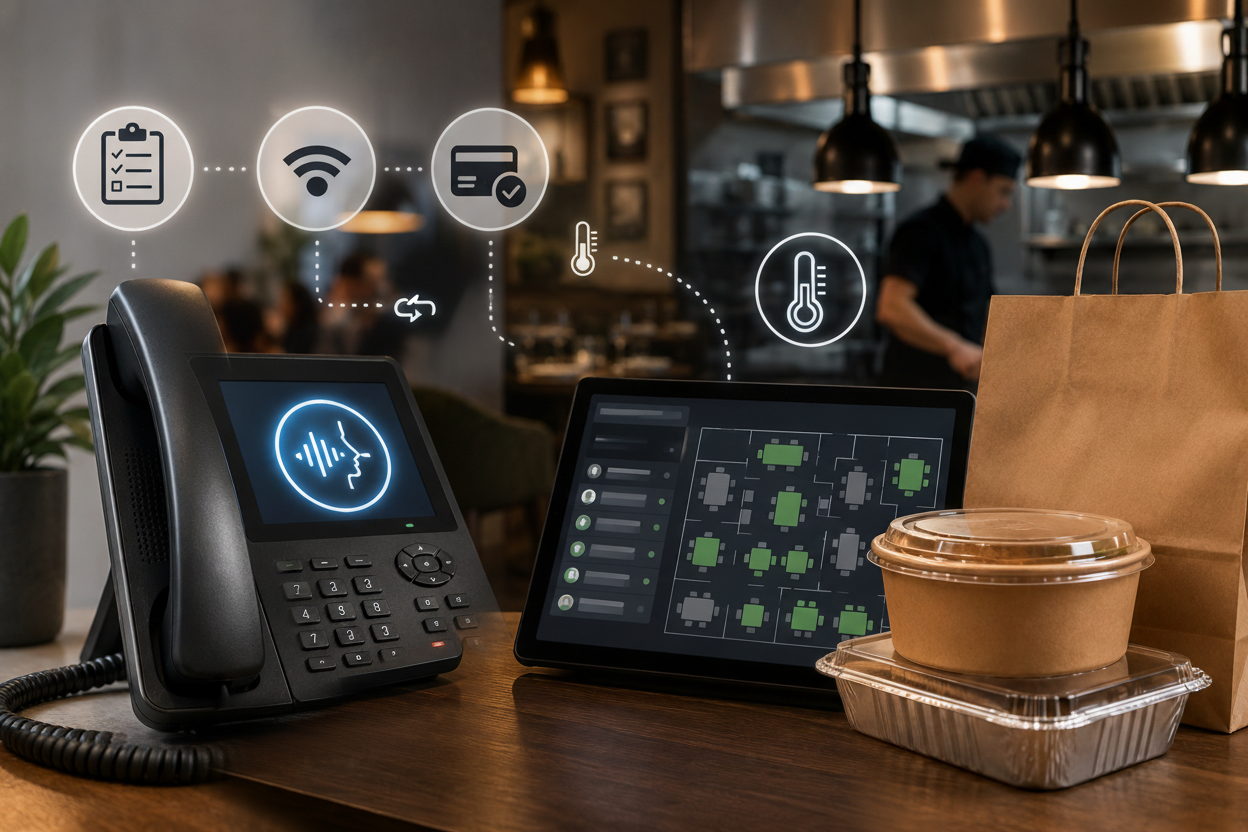
Voice AI makes ordering food easier:
This means fewer mistakes and less waiting for food.
Voice AI gives restaurants useful information:
This information helps restaurants make smart choices about how to run their business.
This section looks at how customers feel about Voice AI in restaurants. We'll see what they like, what worries them, and how restaurants can help them use it.
Most customers like Voice AI:
Some customers worry about Voice AI:
| Concern | Description |
|---|---|
| Privacy | Fear of misuse of voice recordings and personal info |
| Accuracy | Doubt about AI understanding orders correctly |
| Job loss | Worry about AI replacing restaurant workers |
To help with these worries, restaurants can:
To get more customers to use Voice AI, restaurants can:
These steps can make it easier for customers to try and like using Voice AI when ordering food.
Voice AI in restaurants is getting better and will change how they work. Let's look at what might happen next.
Voice AI will work with other new tech:
Voice AI will also get better at understanding people. This means:
Voice AI can do more than just take orders. Beyond phone ordering, it can handle incoming questions when staff are tied up, surface feedback patterns from call data, and flag menu item demand to inform purchasing decisions.
Using Voice AI will change restaurants:
But some people might lose their jobs. Restaurants will need to find new ways for people to work with Voice AI.
Voice AI will make big changes in restaurants. It will make things better for customers and help restaurants run better. As Voice AI gets better, we'll see more ways it can help in restaurants.
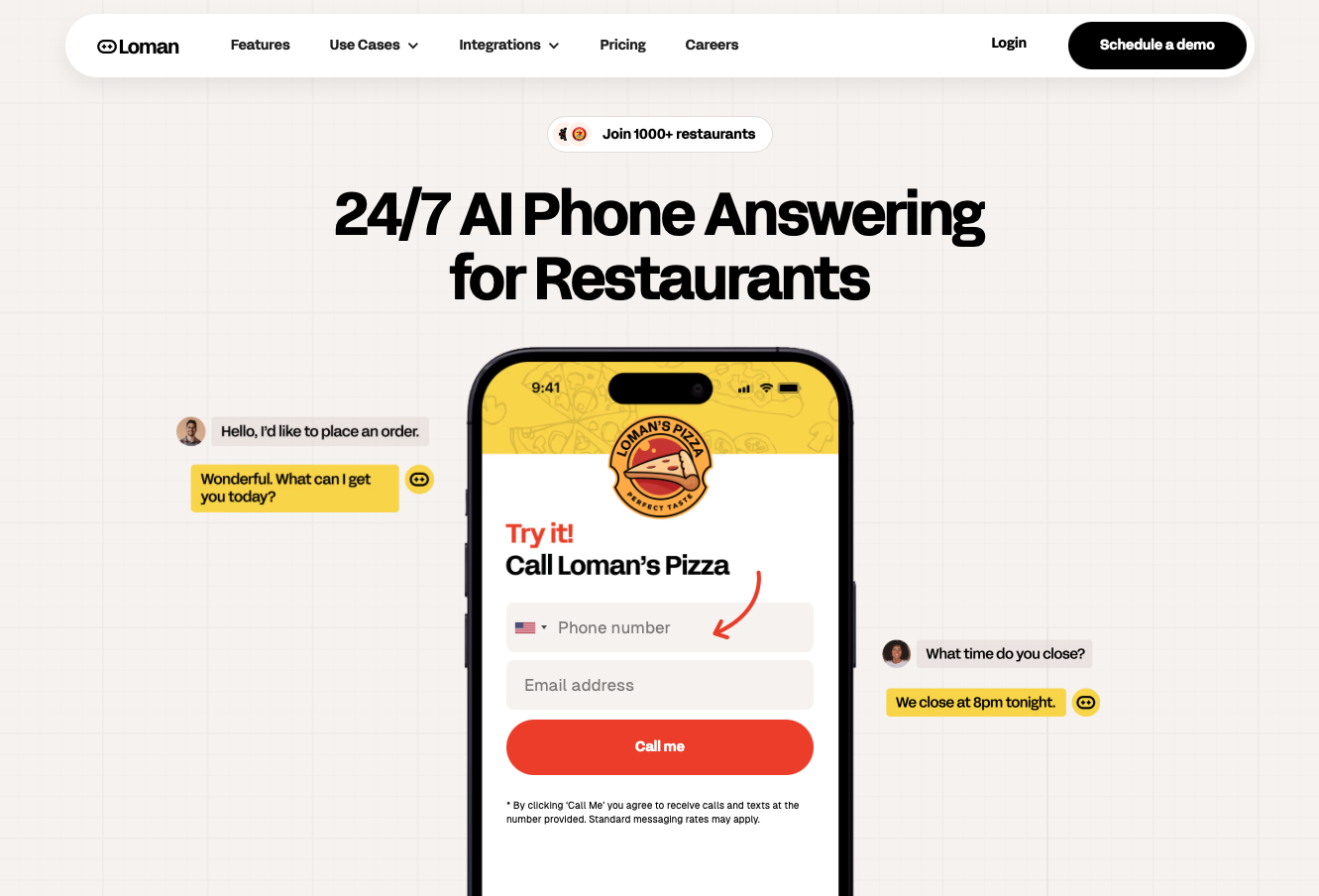
Loman is a 24/7 voice AI phone agent built specifically for restaurants. It answers every call, takes full pickup and delivery orders, and pushes tickets directly to your POS with no manual re-entry. It works with Toast, Square, Clover, SpotOn, and other major POS systems, so your kitchen sees every phone order the same way it sees a counter ticket.
Operators using Loman report up to 22% higher phone revenue and up to 17% lower labor costs. Crust Pizza owner Nick Haselidis put it plainly: "This paid for itself in 10 days. Phones are calm, tickets are bigger, and my team refuses to go back." If you want the same result at your restaurant, Book a free demo to see it in action.
Voice AI captures every modifier, substitution, and special request in a single pass and pushes the ticket directly to your POS with no re-keying step. A 2025 survey found 90% of diners have received a wrong order, and most of those errors trace back to manual re-entry or miscommunication over a noisy phone line. Because the order goes straight from the caller to your kitchen display, that gap is removed entirely.
Slang.ai is built around reservation management and guest communication. It answers calls and books tables through OpenTable and SevenRooms, but does not focus on taking full phone orders or pushing tickets into your POS. Loman handles the complete order cycle: it takes the order, processes payment during the call, and syncs the ticket to your POS so the kitchen sees it the same way it sees a counter order.
Yes, voice AI is designed to work alongside your POS, not replace it. Systems like Loman connect natively with Toast, Square, Clover, SpotOn, and others so phone orders flow into the same kitchen workflow as counter and kiosk tickets, with no new hardware or manual re-entry required.
Voice AI is no longer a novelty in restaurants. It is becoming a standard part of how operators handle calls, take orders, and keep service moving. Loman was built with exactly this in mind: a 24/7 phone agent that answers every call, takes full pickup and delivery orders, syncs tickets straight to your POS, and lets your staff stay focused on the floor instead of the phone. Restaurants using Loman report up to 22% higher phone revenue and up to 17% lower labor costs, and Crust Pizza owner Nick Haselidis put it simply: "This paid for itself in 10 days." If you want to see how it works at your restaurant, see Loman in action.
Enter your information in the form to receive a call from Loman and place an order like a customer would!

